

祖母とのヴァナキュラー
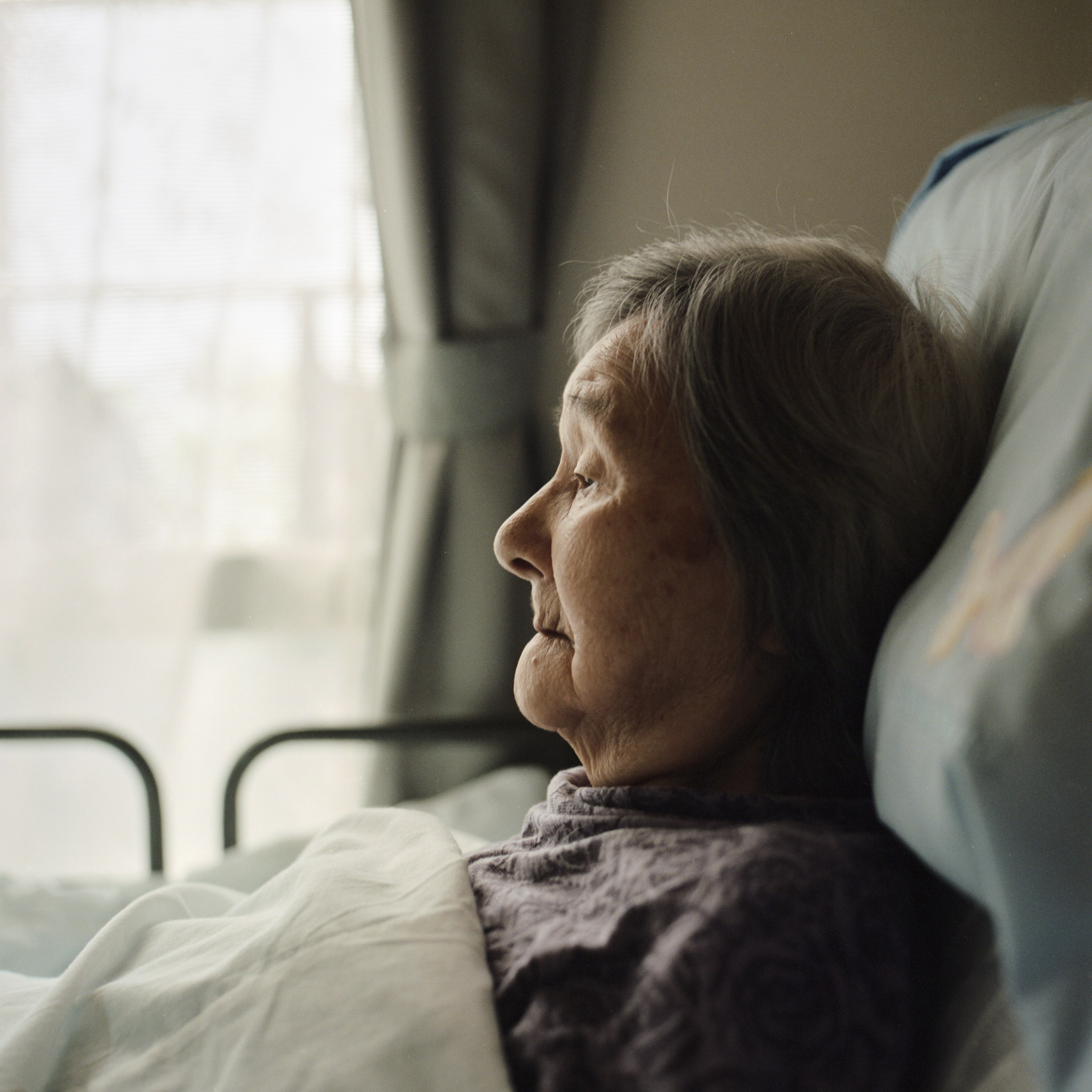
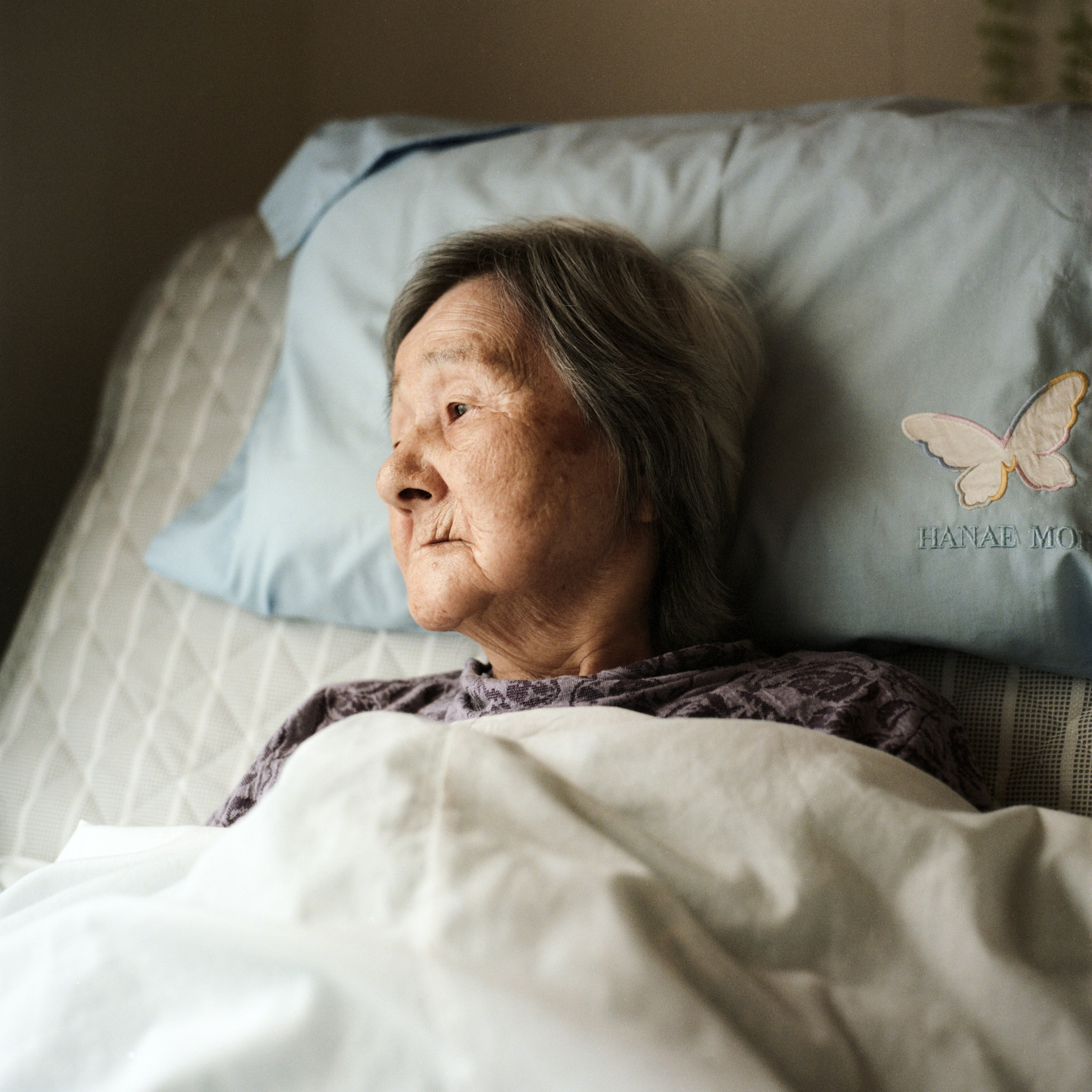
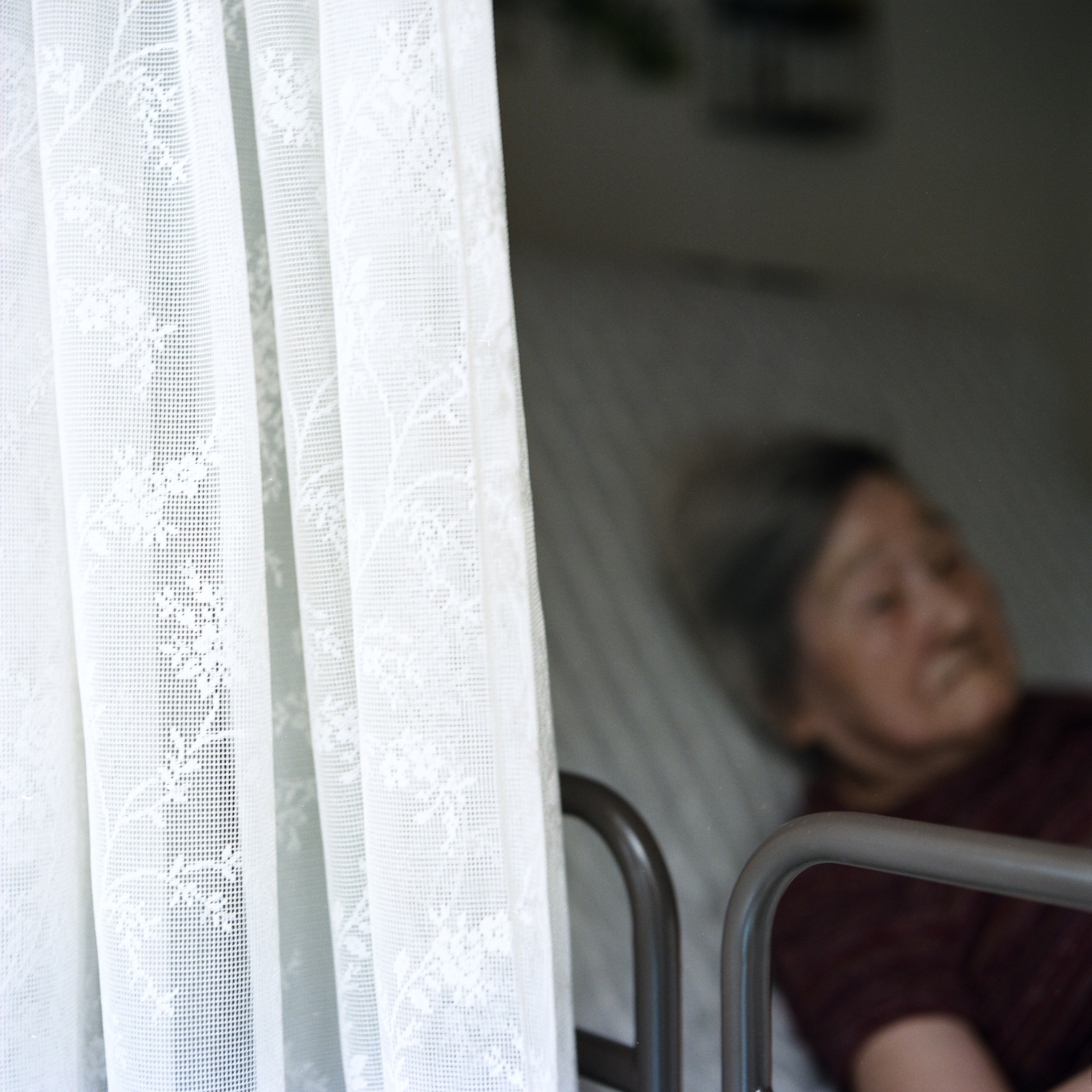
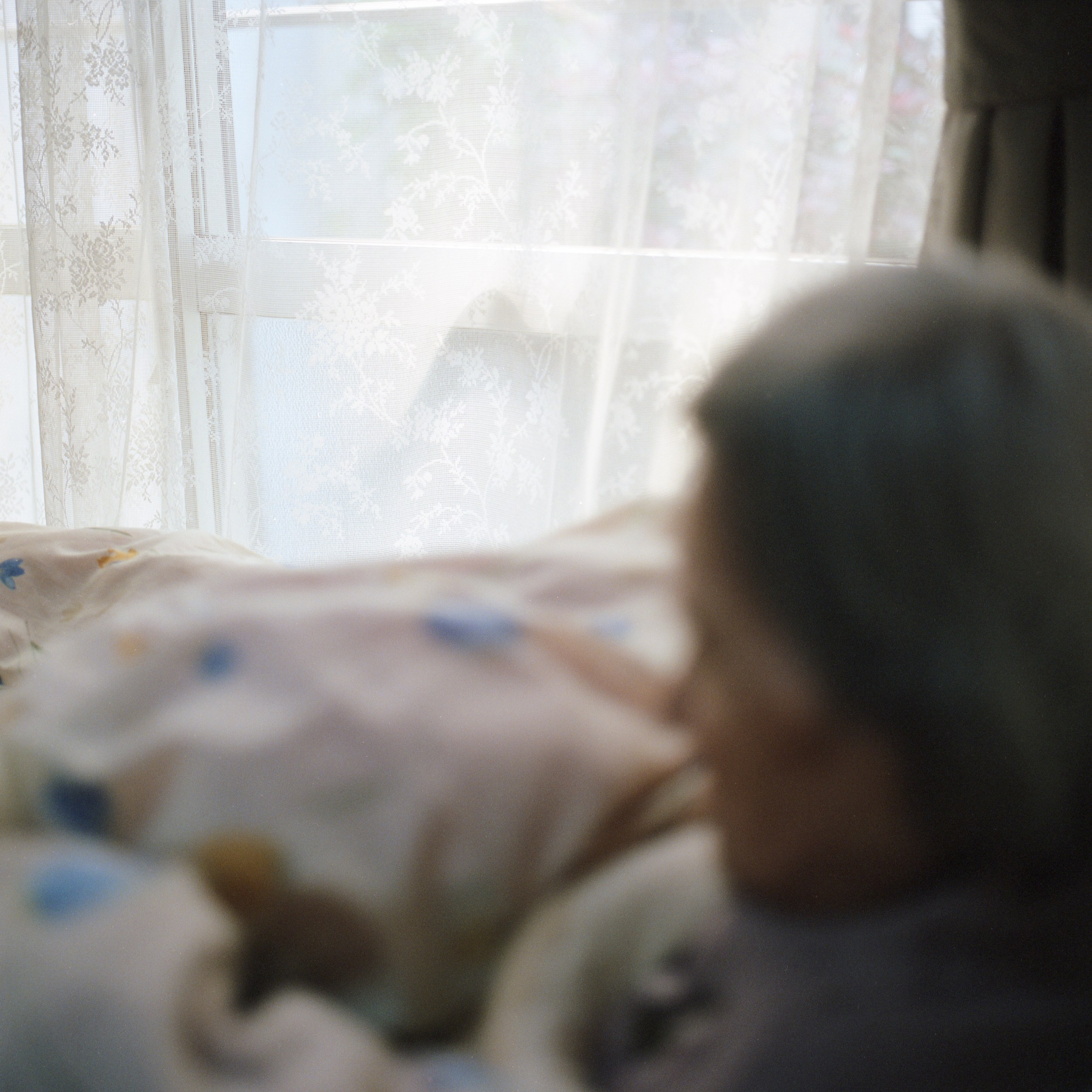
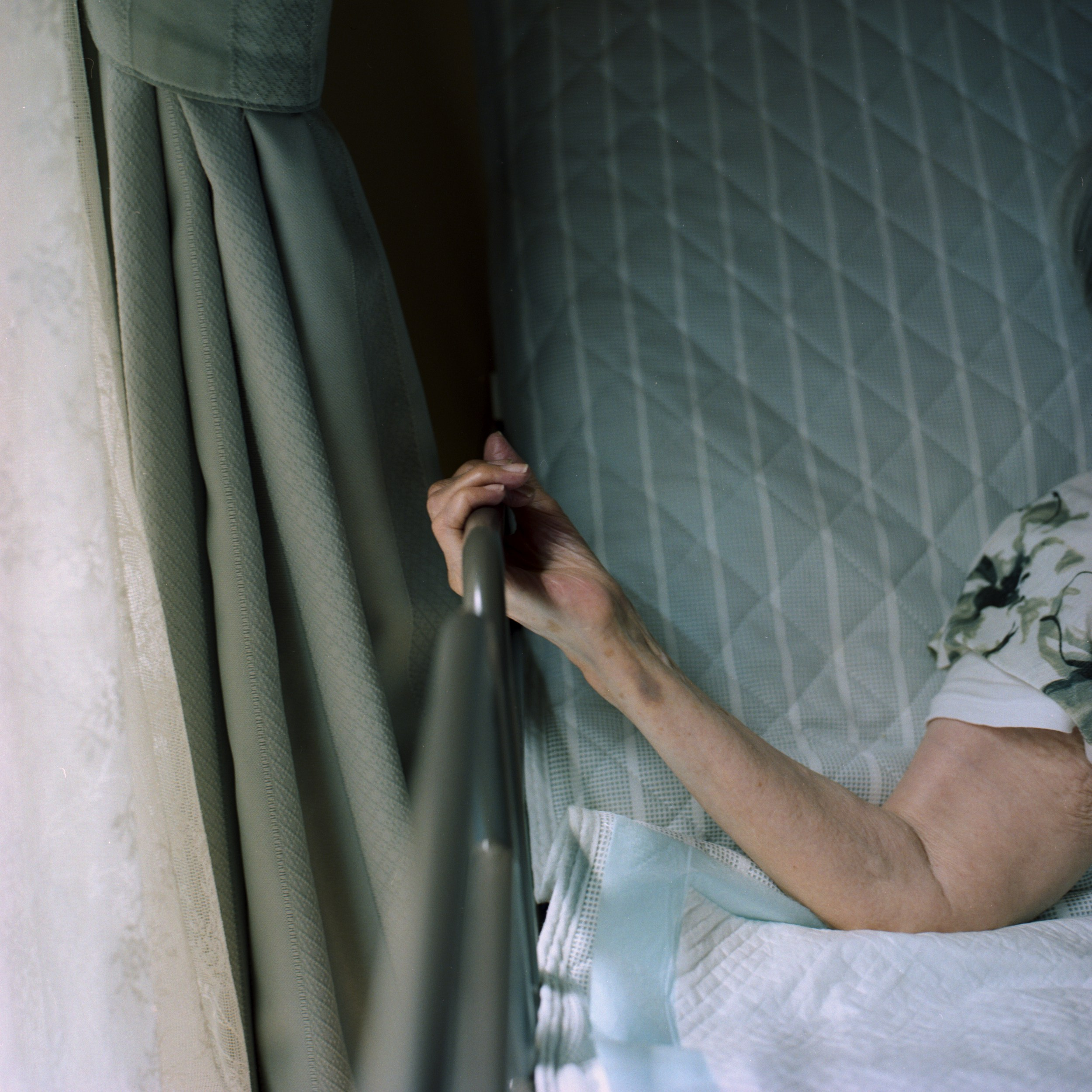
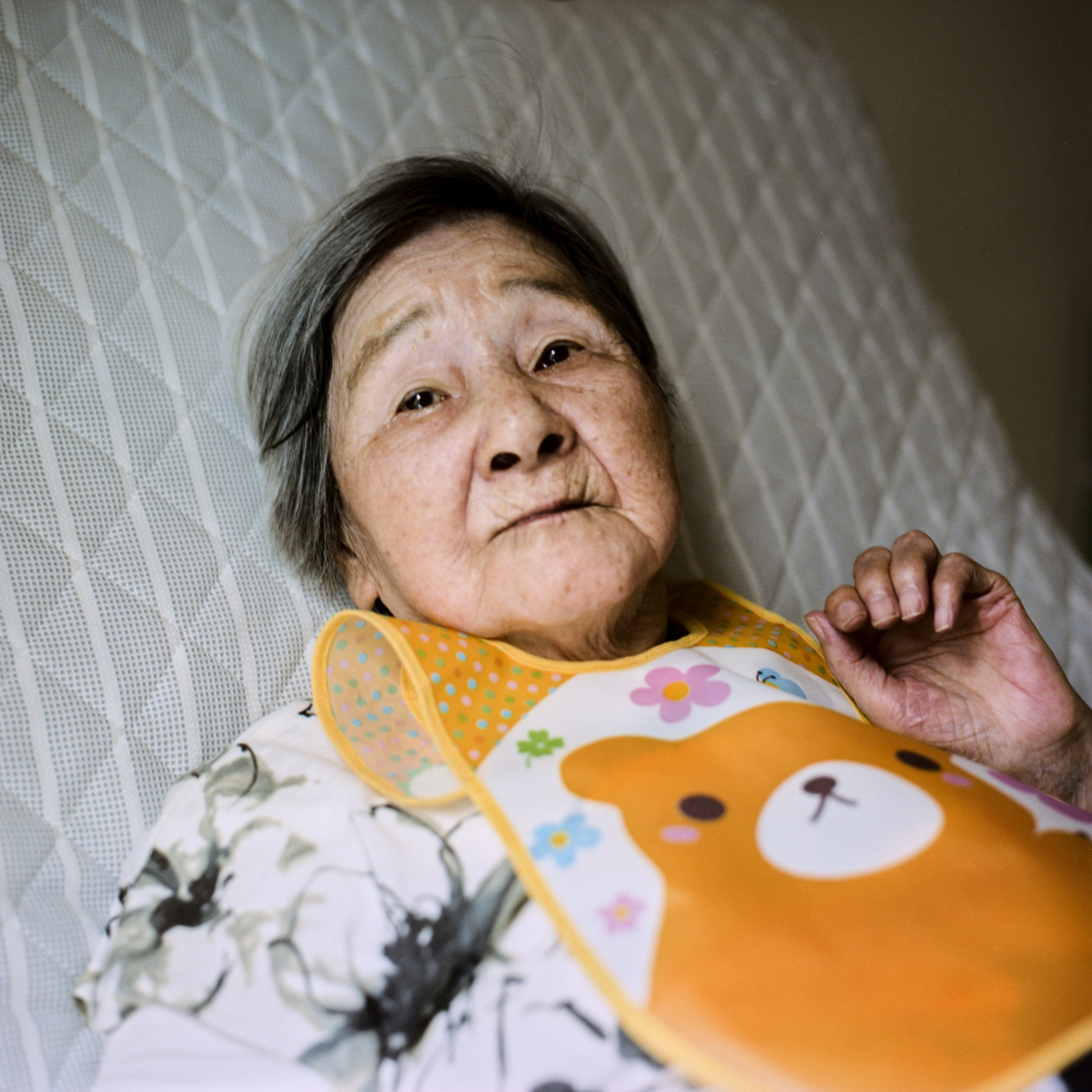
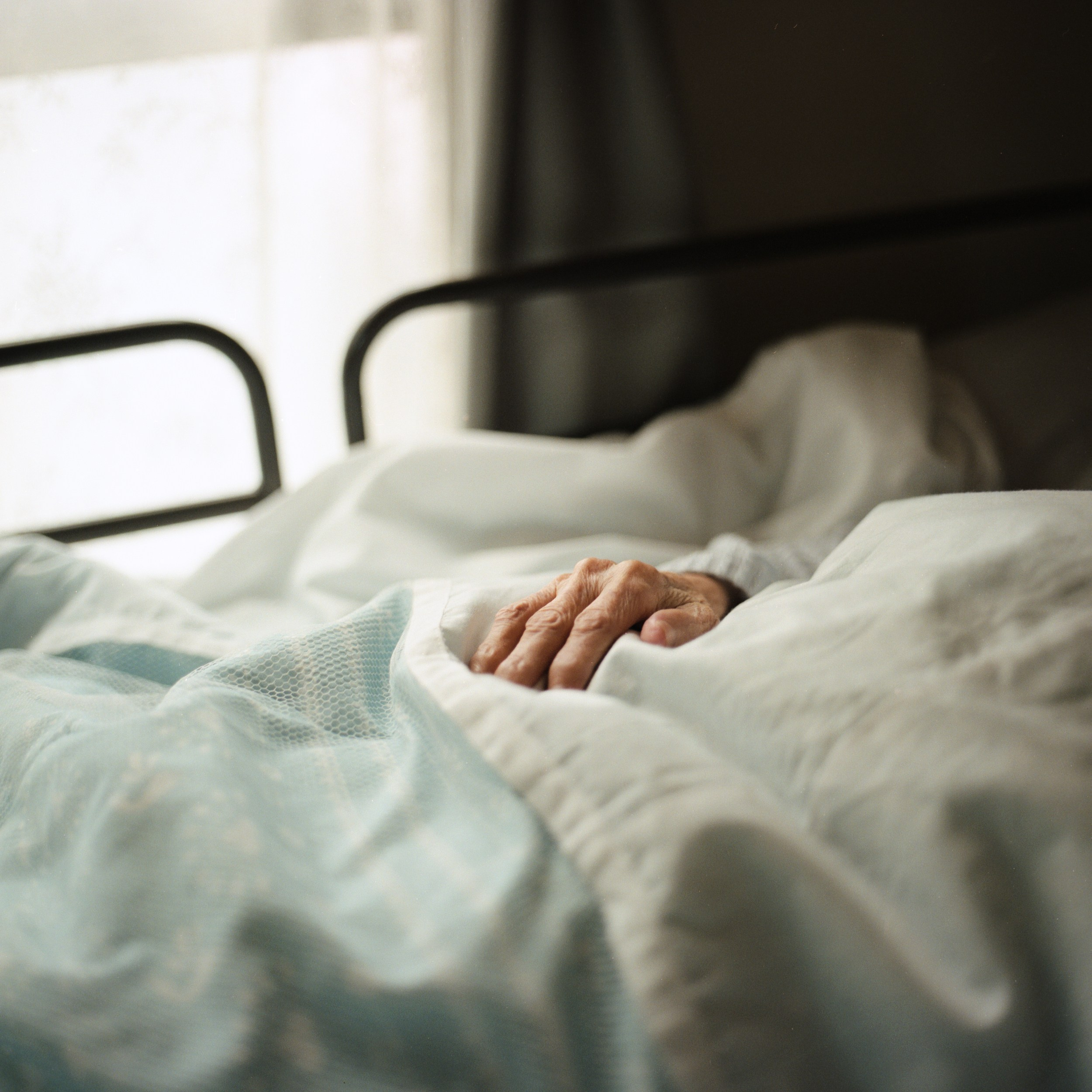
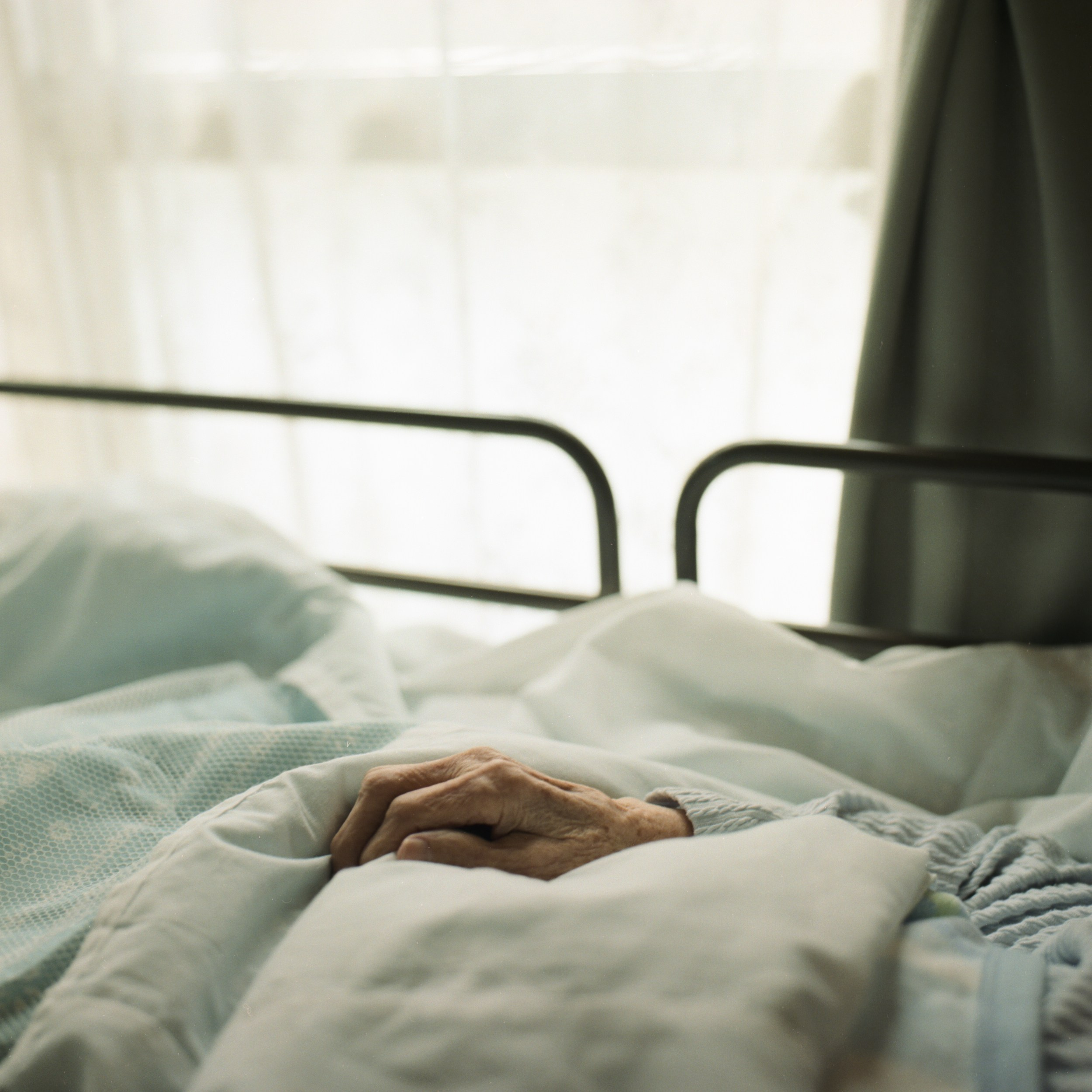
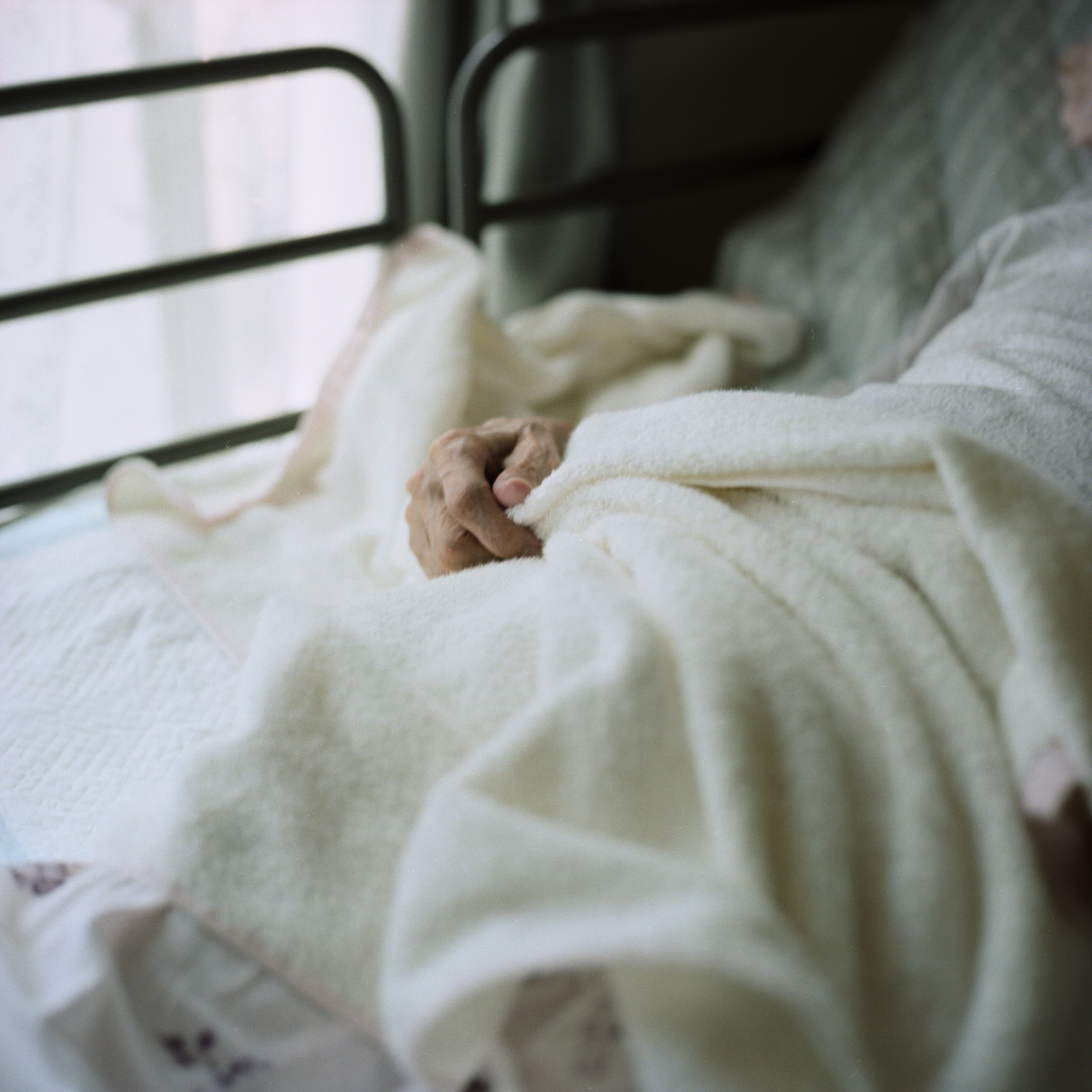
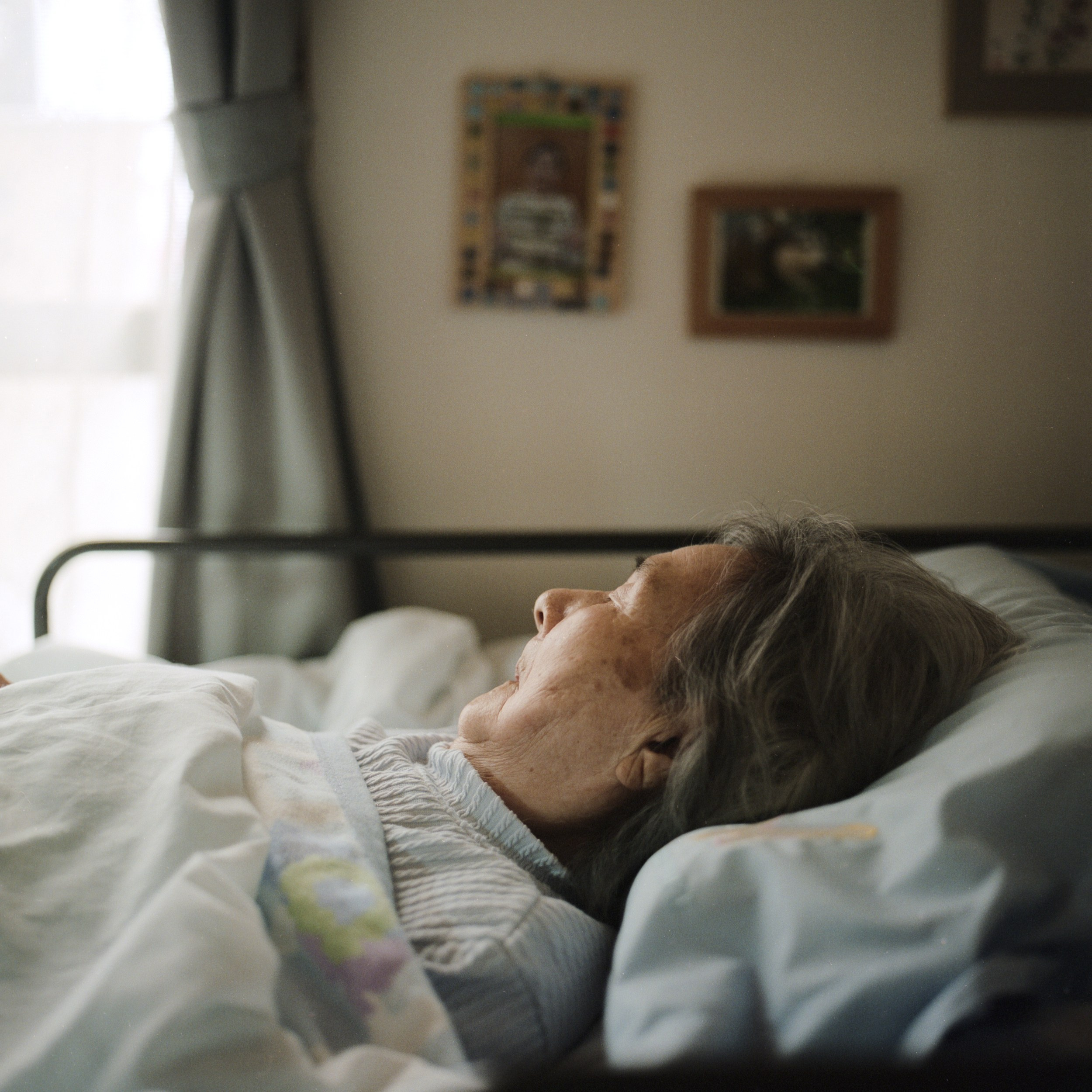
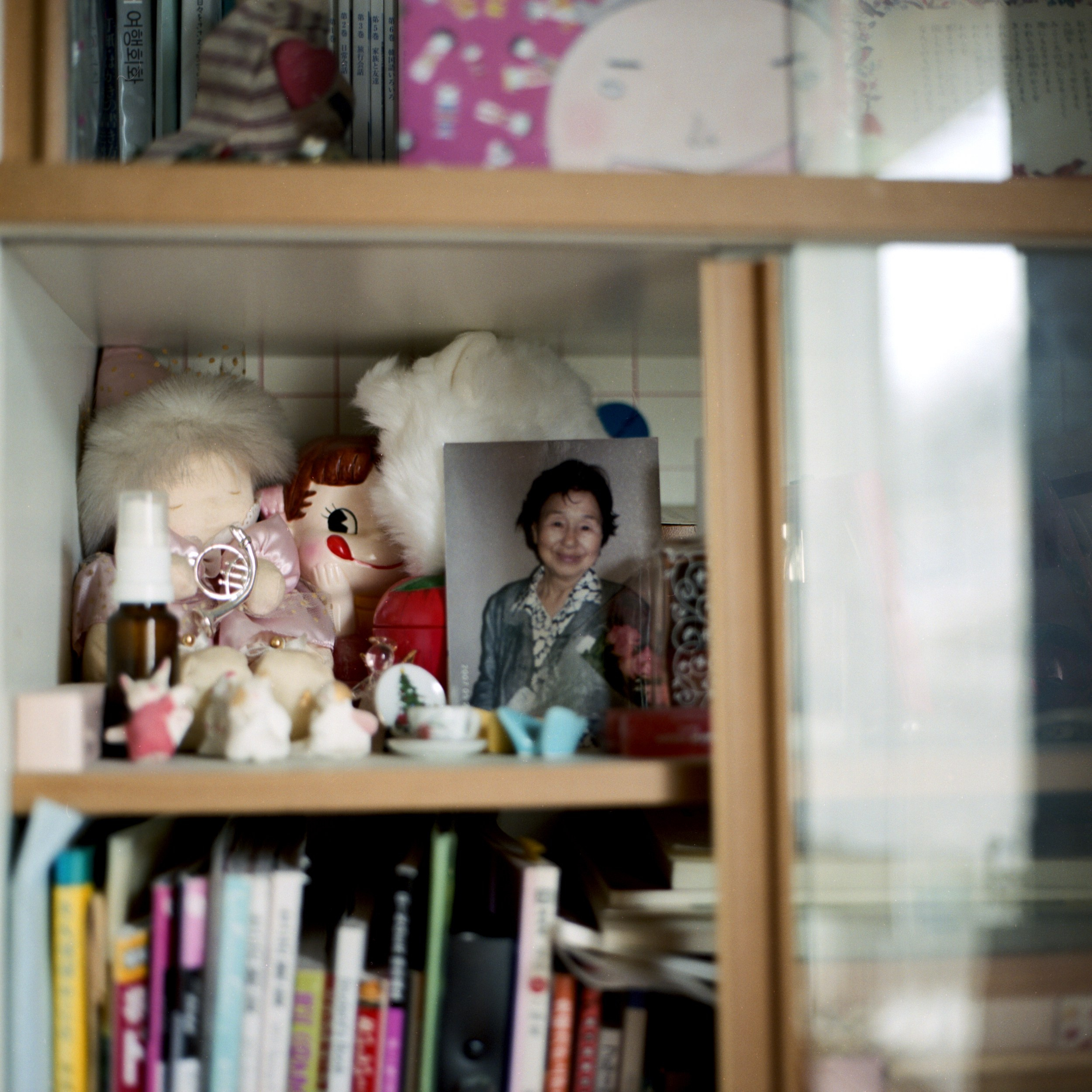
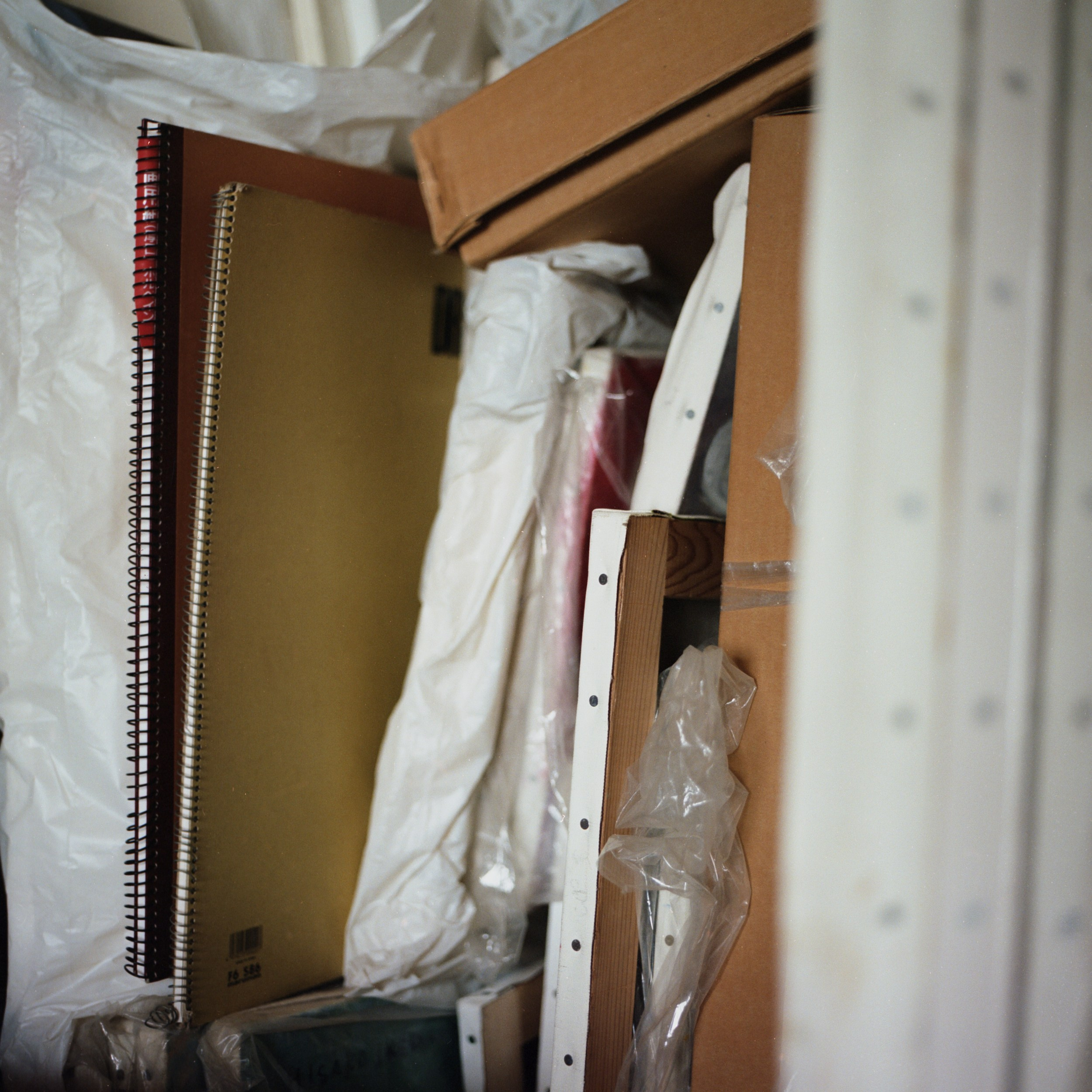
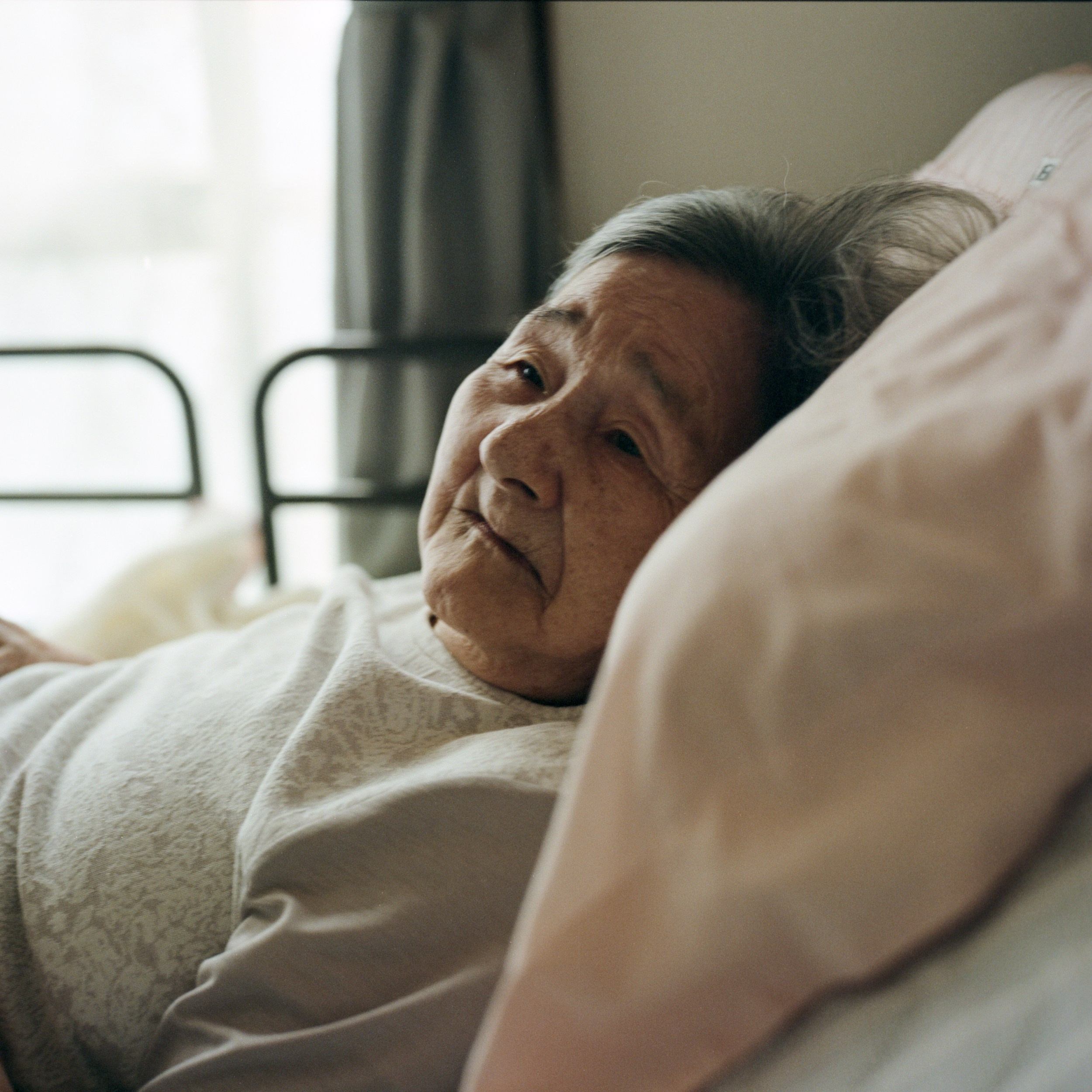
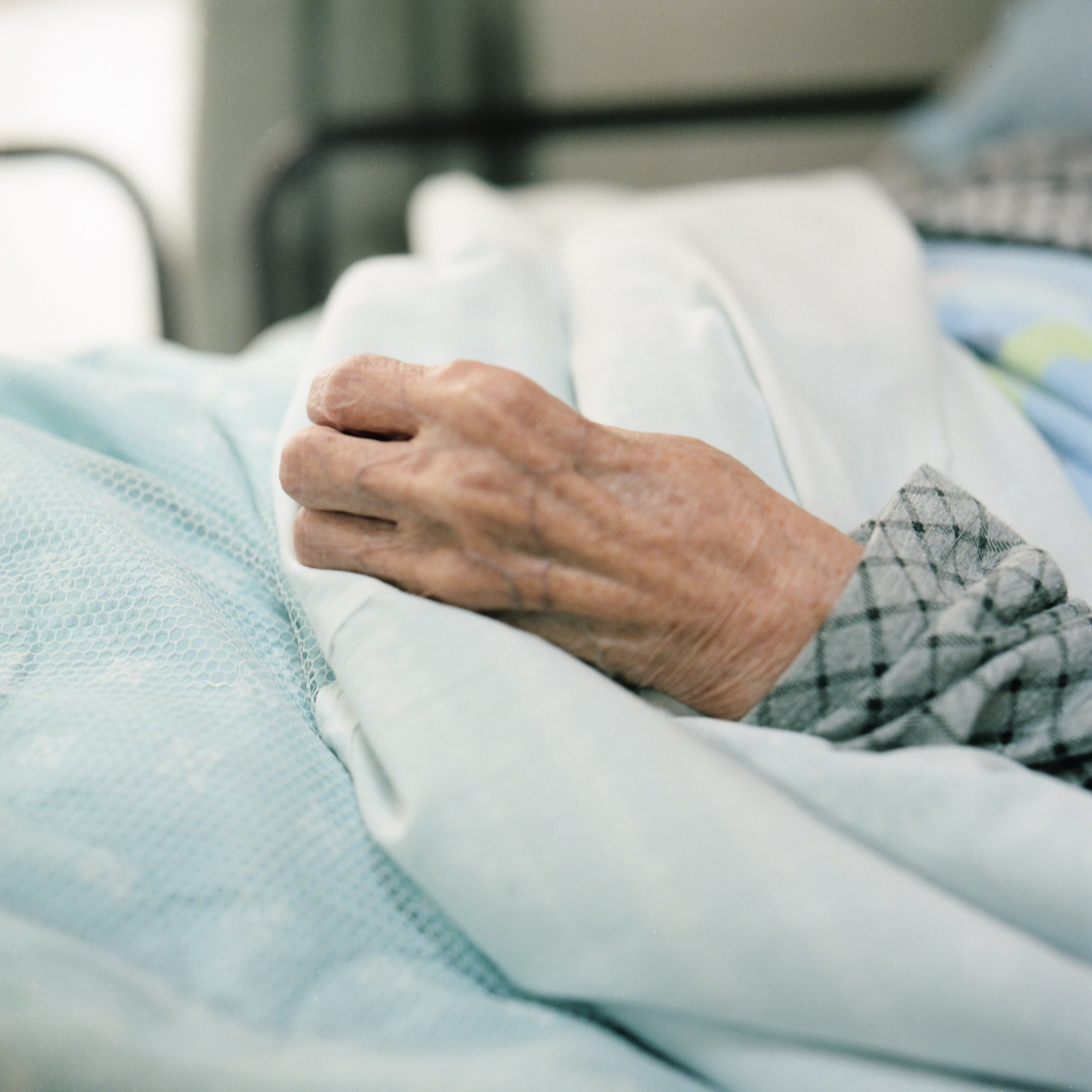
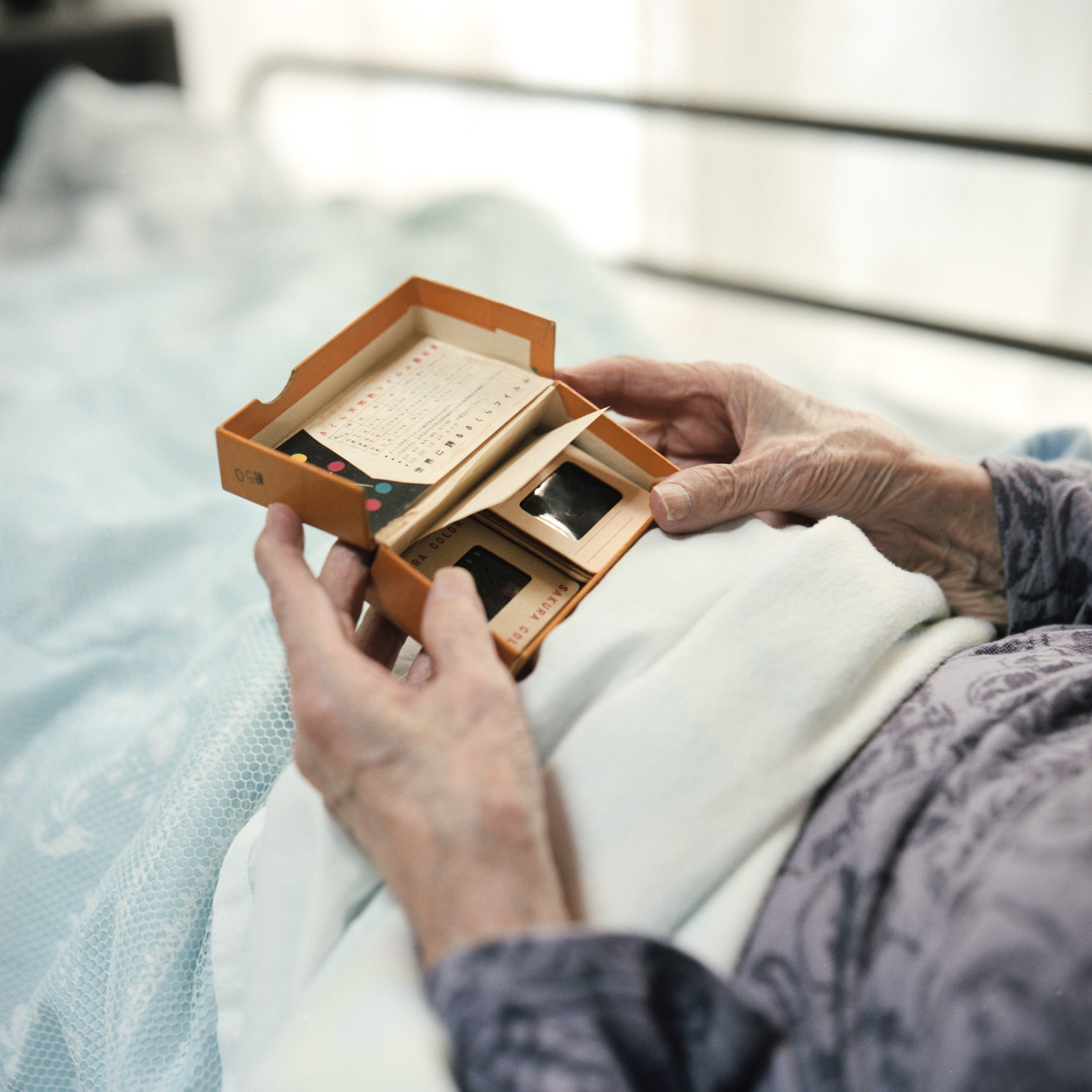
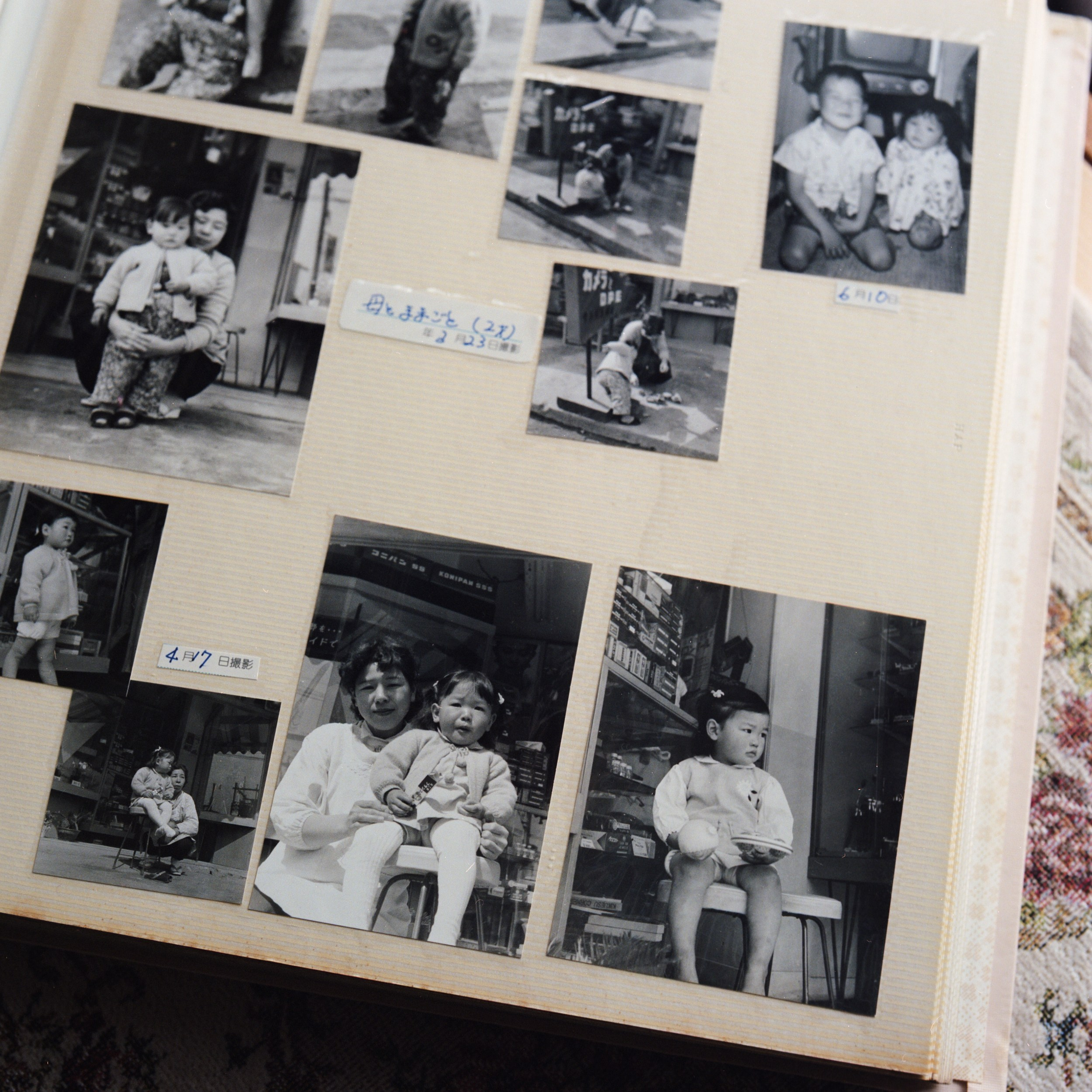
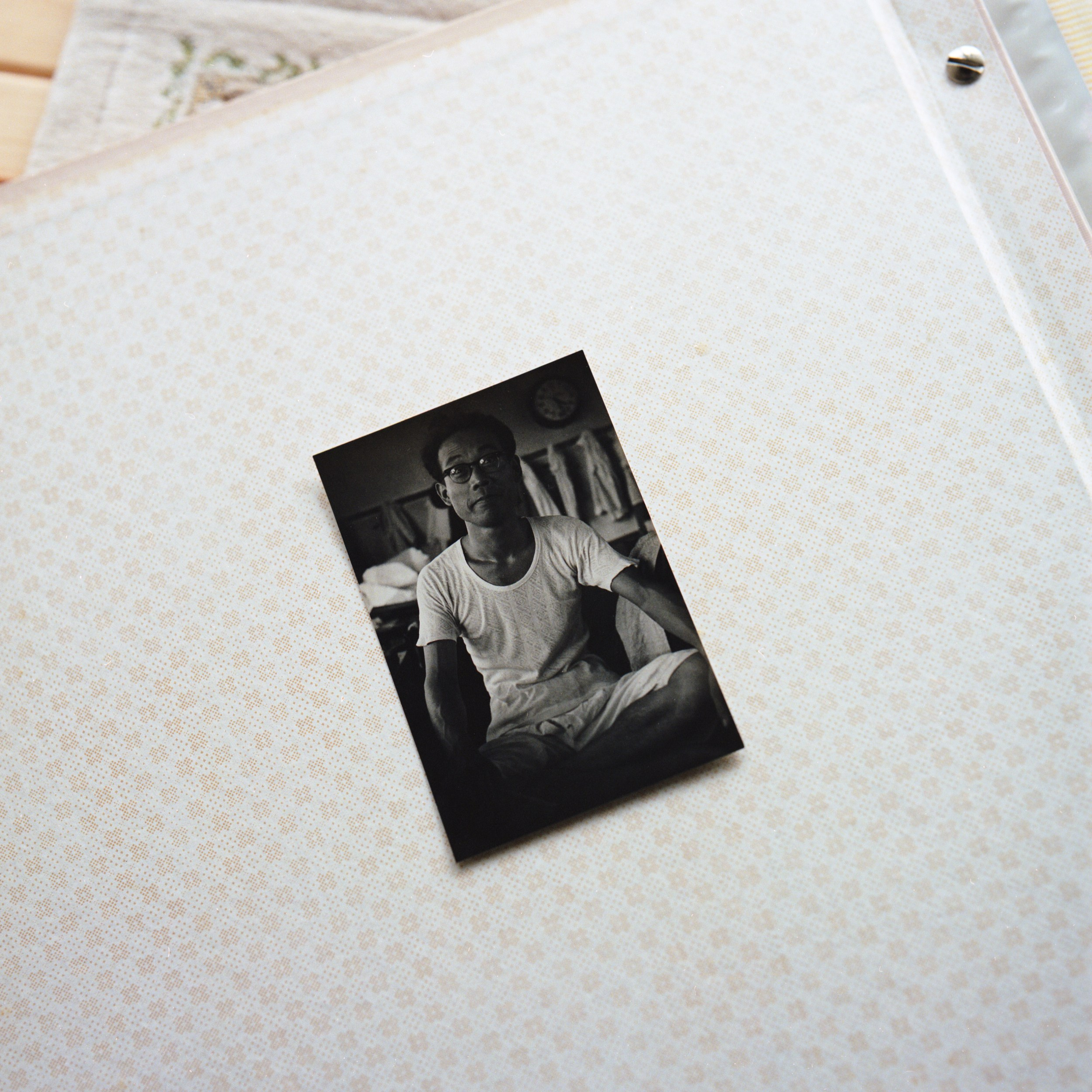
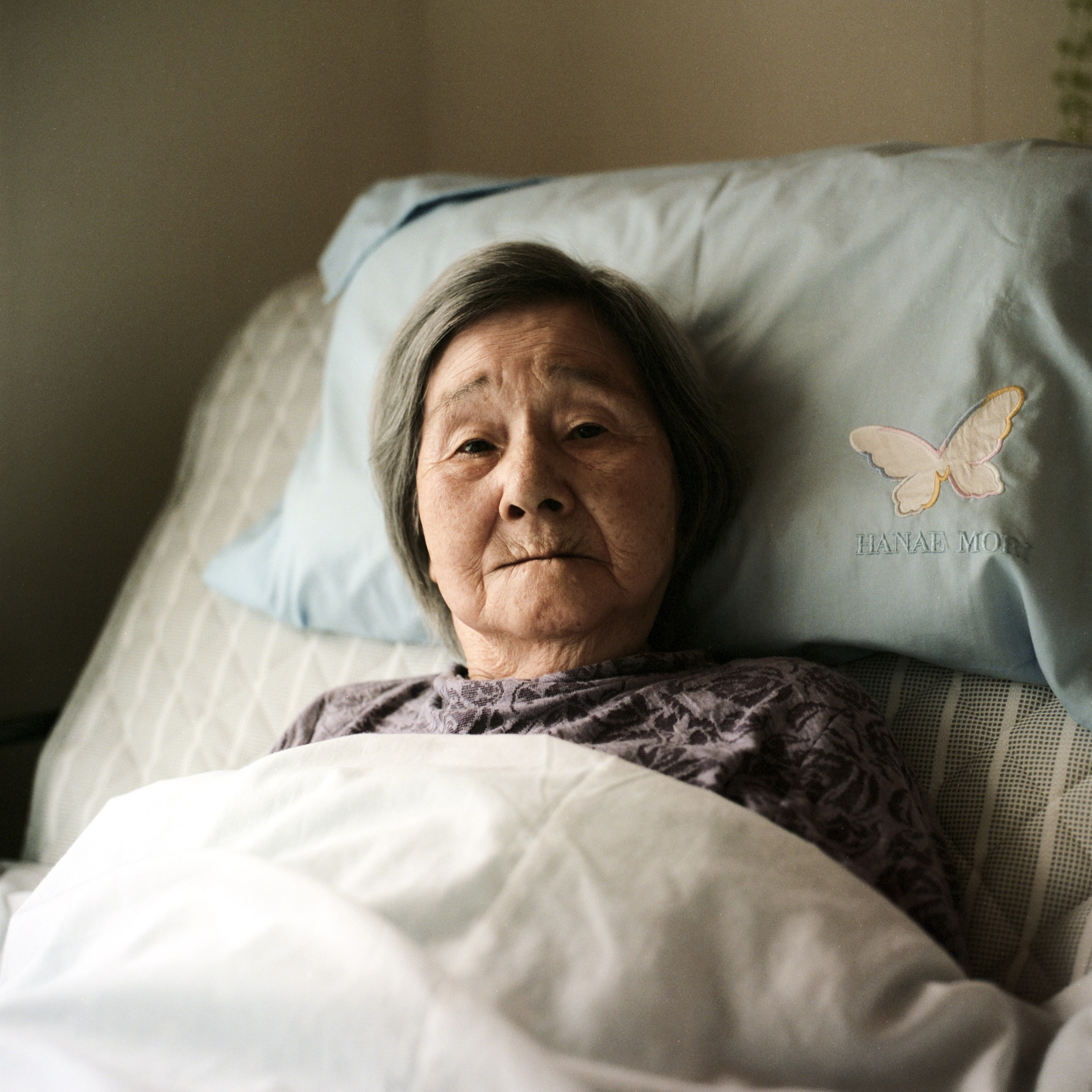
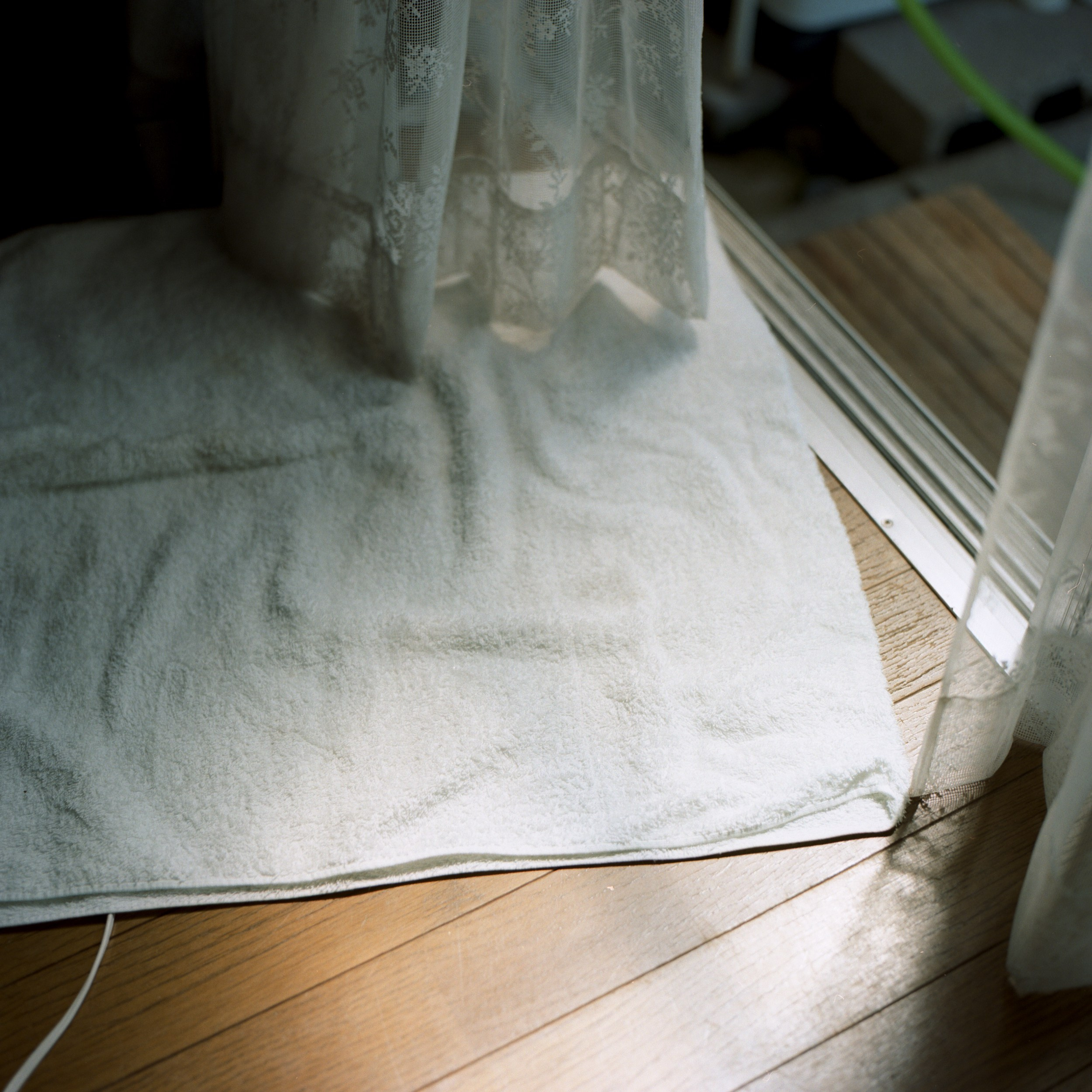
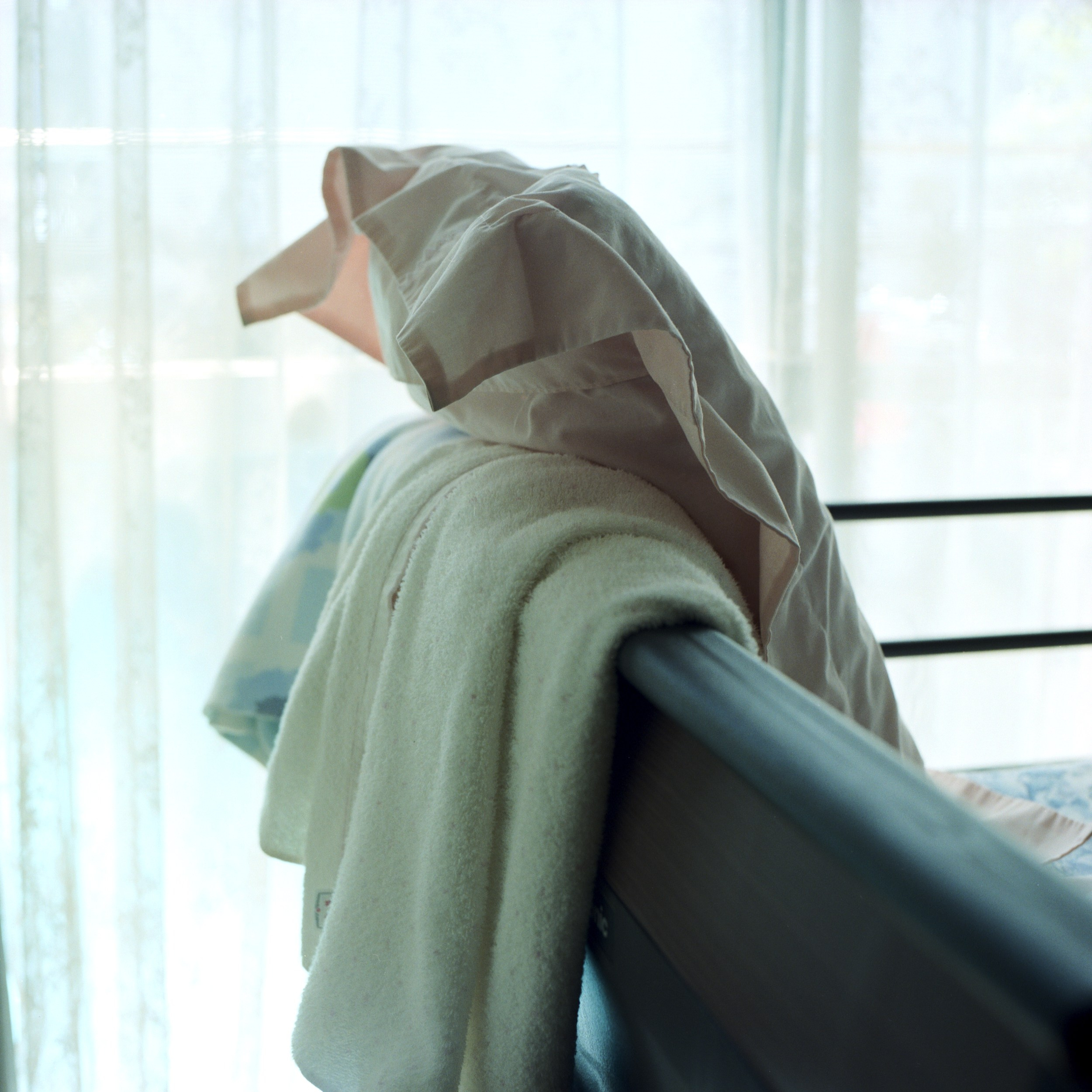
祖母は長く町の写真屋をしていました。白黒写真が主流だった頃、現像もプリントも店の暗室でひとつひとつ手仕事でした。写真屋は人々の日常と特別な出来事を記録する場所であり、祖母は丁寧に暗室でフィルムを現像し、引き伸ばしては手渡していました。やがて時代が変わり、カラーフィルムが一般的になると、小さな写真屋での対応は徐々に難しくなりました。プリントの多くは外部の現像所に出されるようになり、祖母が大事にしていた「写真屋の仕事」は静かに幕を下ろしました。店を閉めたあとも祖母は絵を描き、変わらずカメラを手にしていました。カメラは彼女が世界とつながり続けるための小さな窓だったのでしょう。晩年、祖母は認知症を患い、私たちとの距離が少しずつ広がっていきました。言葉も、表情も、記憶も、輪郭が淡くなっていき、やがて寝たきりに――。その姿を前に、私は自然とカメラを手に取りました。祖母の「今」に向き合い、その微かな揺らぎや変化をただ見つめ、記録すること。それはささやかな身体的応答であり、言葉にならないコミュニケーションでもありました。撮影には、祖母が現役だった頃と同じ中判フィルムカメラをあえて選びました。ウエストレベルファインダーを覗く代わりに、祖母と目線を合わせ、顔を見つめながらノーファインダーでシャッターを切ったため、ピントが「ずれ」ることもしばしばありました。祖母の目は私を見つめているようでいて、その視線は認知症によって私を認識していないことも多く、その不可視の距離に戸惑いました。その体験は、撮影時の身体的な緊張や心の震えとともに写真一枚一枚に刻まれています。私は当時、うまく撮れなかったと思っていましたが、祖母の死後数年を経て、その「ずれ」こそが、私たちの関係性の不確かな真実を象徴していると考えるようになりました。写真は記憶の断片を映し出すだけでなく、その欠落を際立たせ、同時に記憶の不完全さや写真の持つ暴力性をも映し出しています。この相反する性質のなかに、私たちの物語が深く刻まれているのです。私は祖母の顔だけでなく、手や足、愛用のオペラグラスやラジオ、静かな部屋の隅など、祖母の日常をかたどる「もの」にもカメラを向けました。これらは、記憶と現実のあいだを揺らぎながらさまよう、小さな証人のようです。撮影中の身体的戸惑いや葛藤は私の内面の震えと結びつき、写真の一部として生まれています。同じ頃、母は祖母の膨大な写真を整理しました。それぞれが自分なりの方法で祖母の存在や記憶の断片を拾いあつめていきました。生まれた写真や整理されたアルバムは決して“完全な記憶”ではありません。むしろ、その揺らぎや欠落の中こそ、写真がもたらす「揺らぎある証言」の力が宿っていると感じます。祖母がこの世を去り、季節が巡るなかで私はこれらの写真を通して過去と現在の間を行き来し、静かに向き合っています。写真は単なる静止画ではなく、時間の揺らぎを孕み、記憶の裂け目を映し出します。このプロジェクトは、一人の写真好きな女性の人生をめぐる個人史であると同時に、認知症を抱えた家族とその周囲が直面する記憶の断絶に心を寄せる試みです。写真の限界と豊かさ、老いと忘却、そしてその中に内包される不確かさ──「ずれ」こそが私たちの物語の核であり、それが読み手の感覚と響きあうことを願っています。
Vernaculars with My Grandmother
My grandmother ran a local photo shop for many years. When black-and-white photography was mainstream, developing and printing were done one by one, by hand, in the store’s darkroom. The photo shop was a place that recorded people’s daily lives and special events; my grandmother would carefully develop the film in the darkroom, enlarge the prints, and hand them over to her customers.
Eventually, times changed. As color film became common, it became gradually difficult for the small photo shop to keep up. Most prints were sent to external photo labs, and the "work of the photo shop" that my grandmother cherished quietly drew to a close.
Even after closing the store, my grandmother continued to paint, camera always in hand. The camera was likely a small window for her to stay connected to the world.
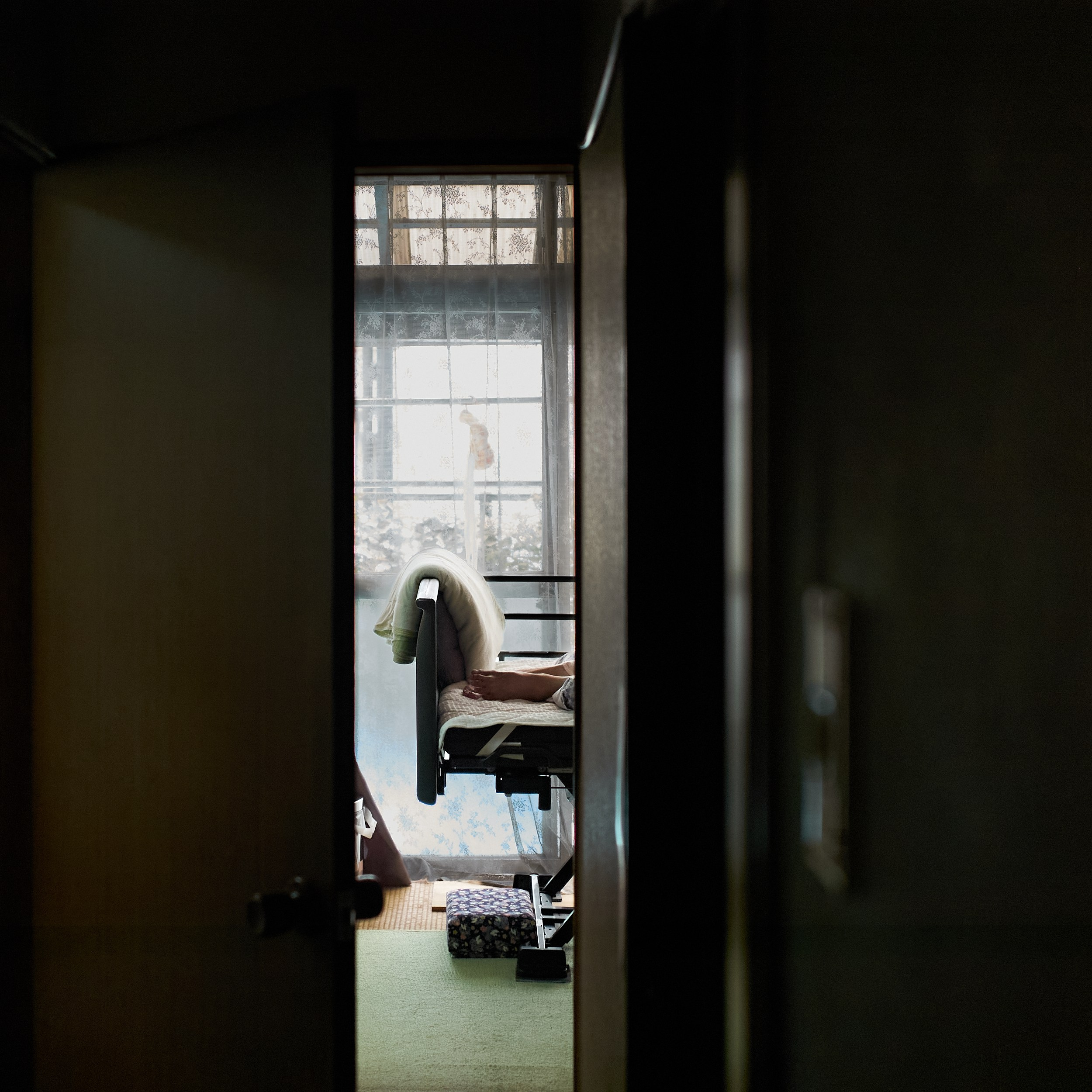
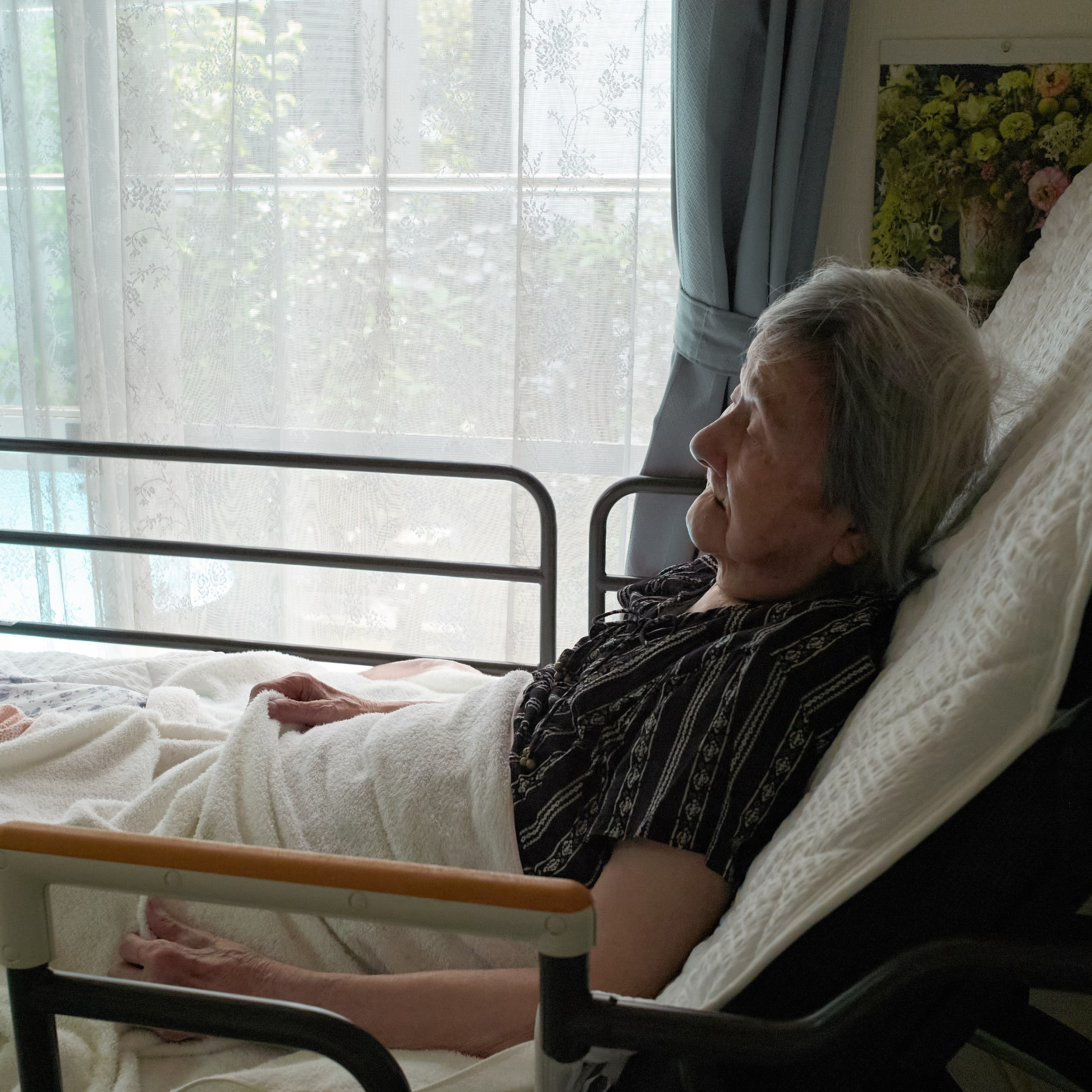
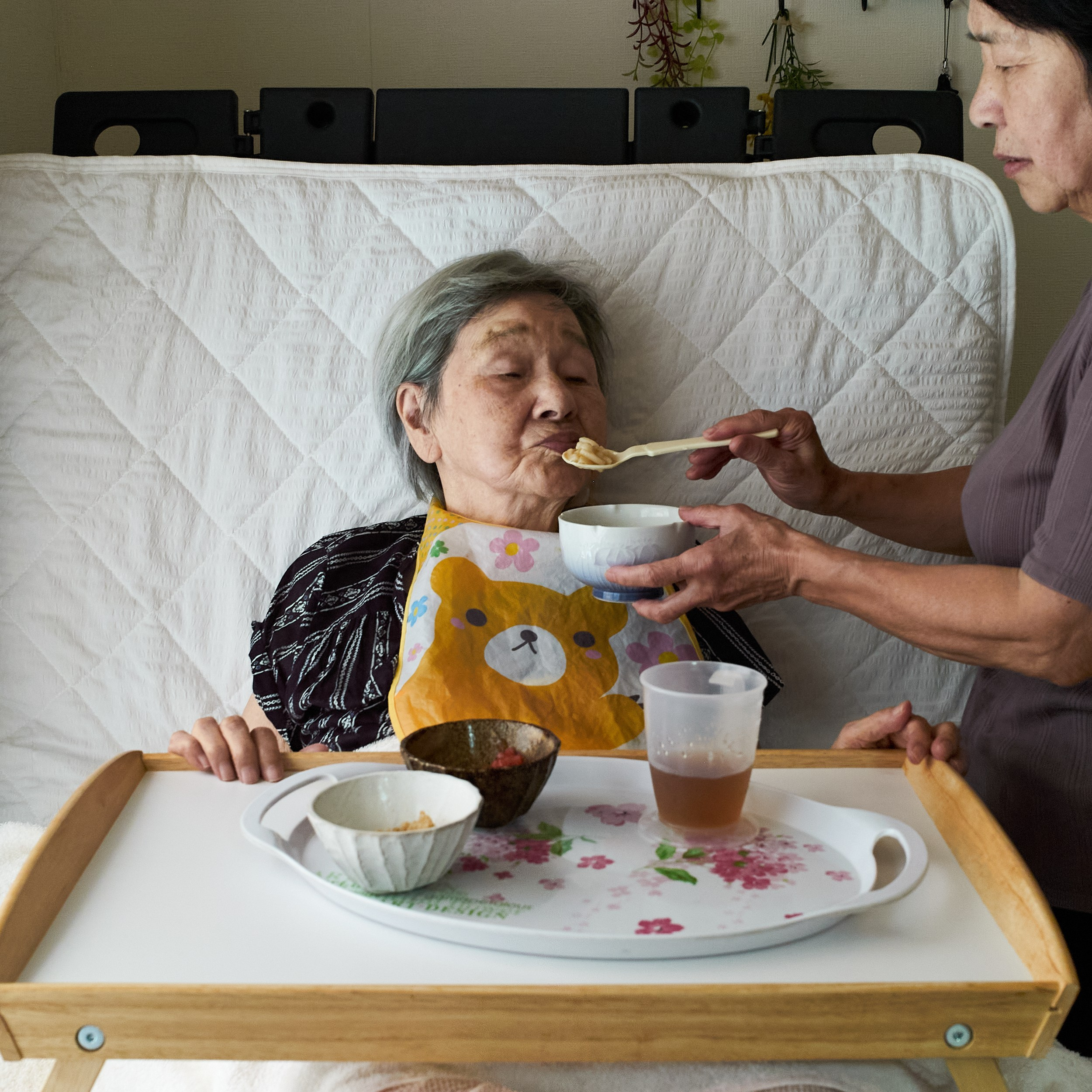
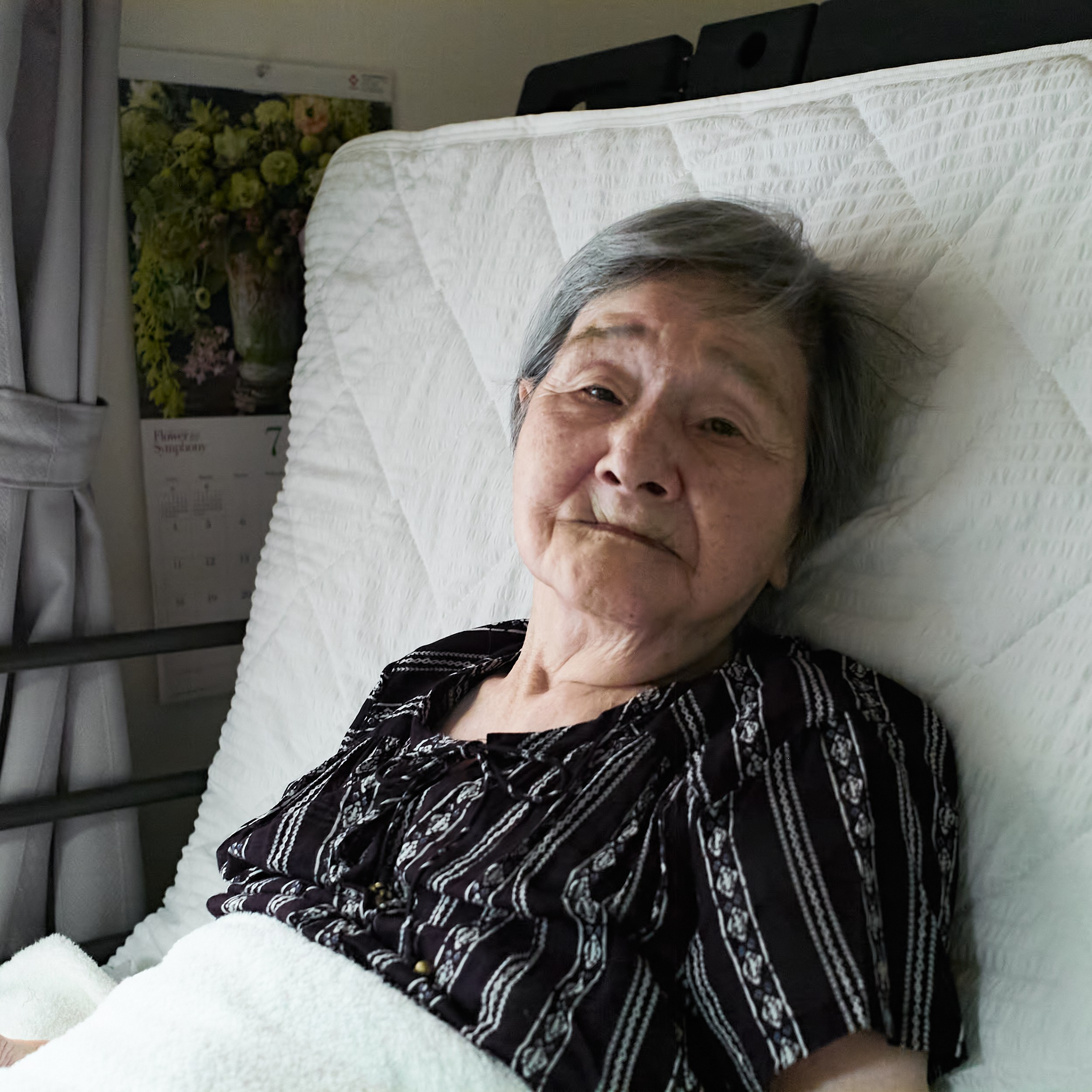
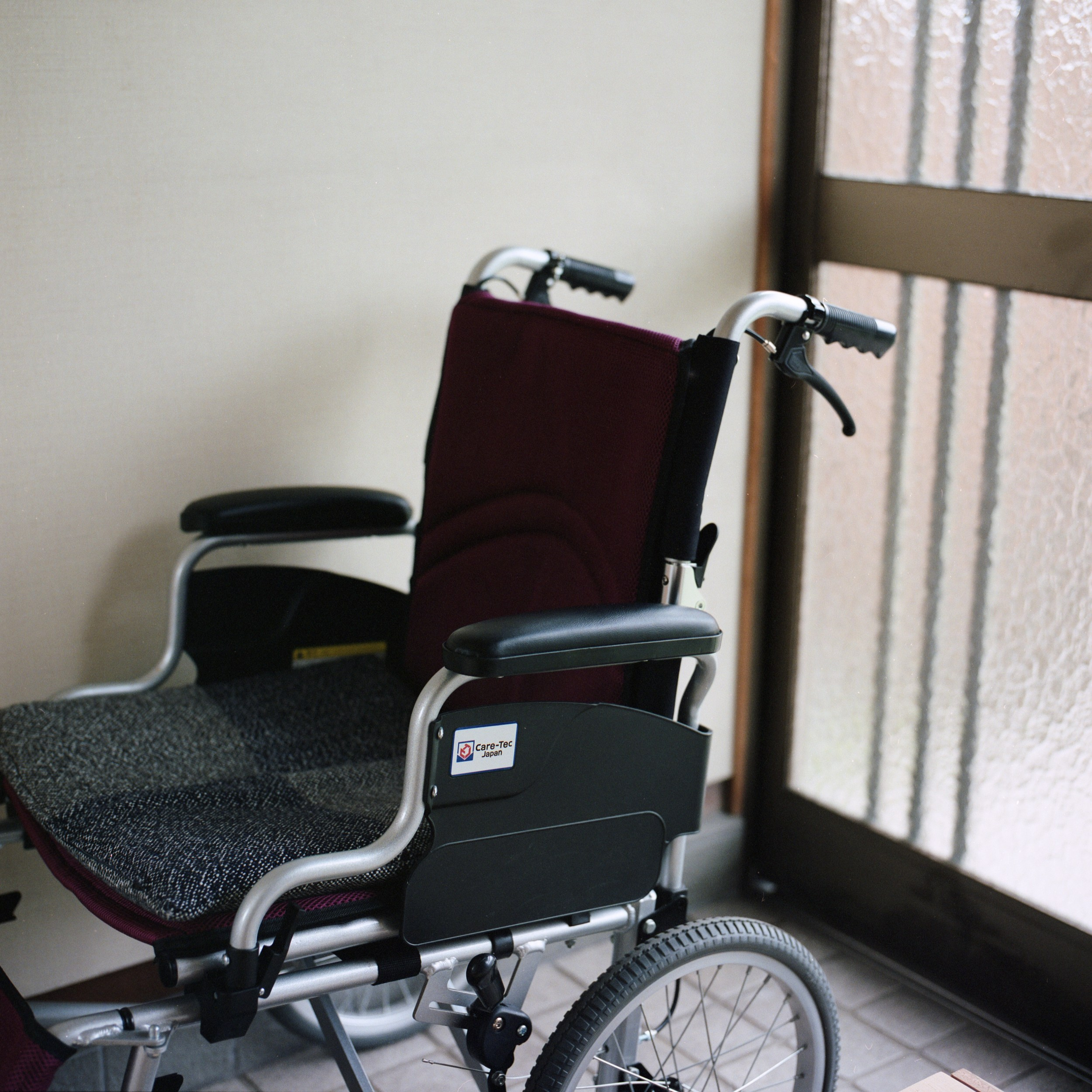
In her later years, my grandmother suffered from dementia, and the distance between us slowly widened. Words, expressions, and memories—their outlines grew faint, and eventually, she became bedridden.
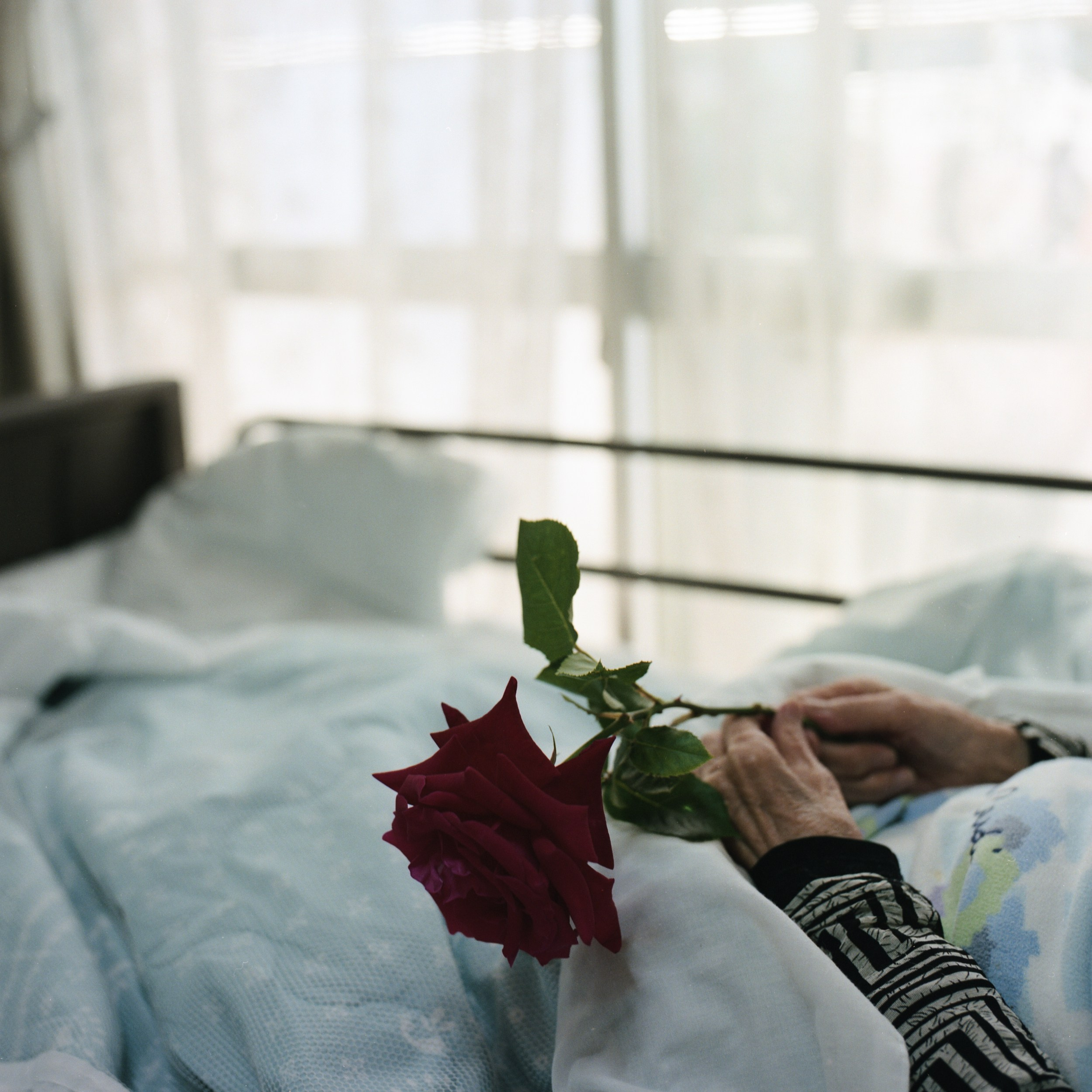
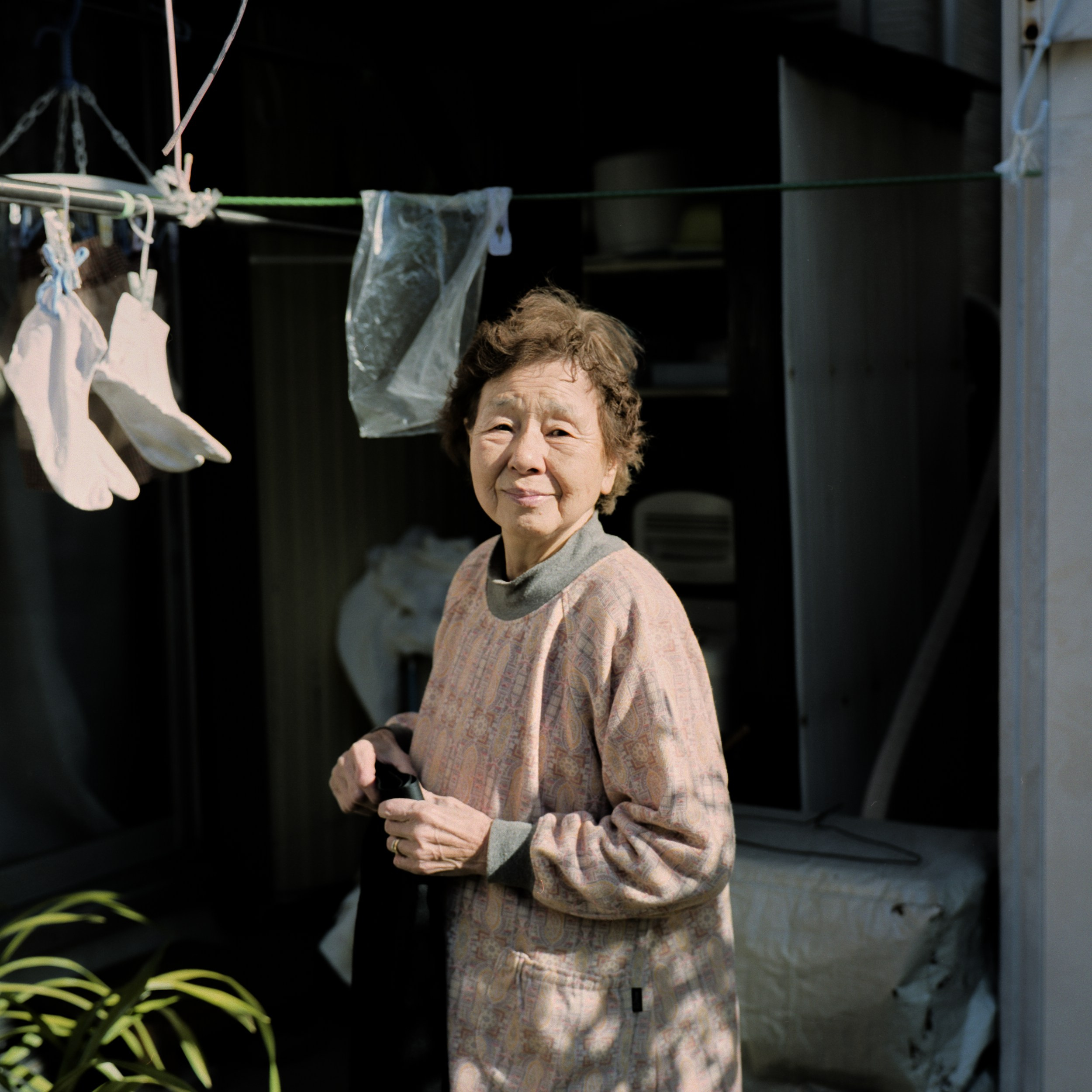
Faced with her condition, I naturally reached for my camera. To face my grandmother’s "now," to simply gaze at and record the subtle fluctuations and changes. It was a modest physical response, a wordless communication.
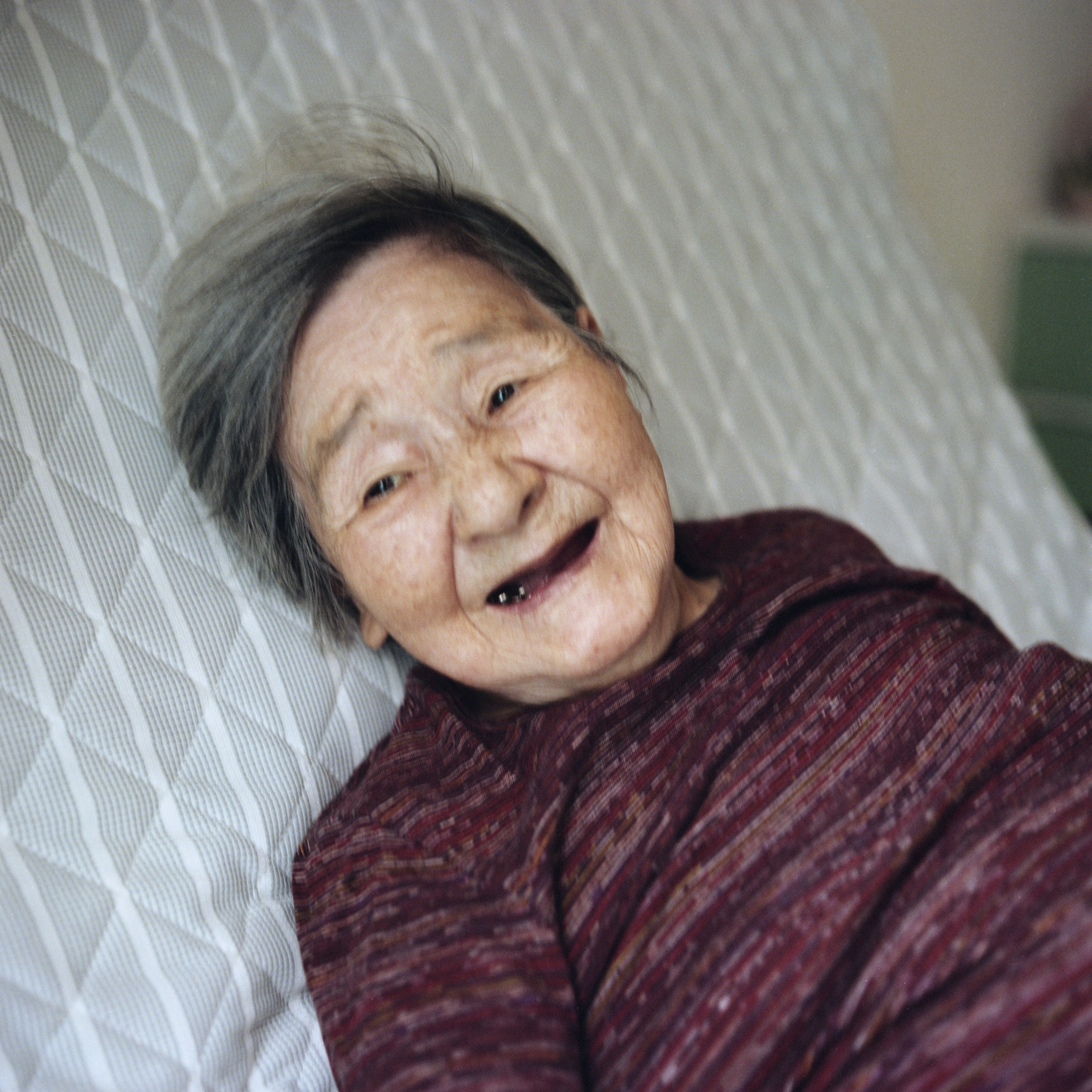
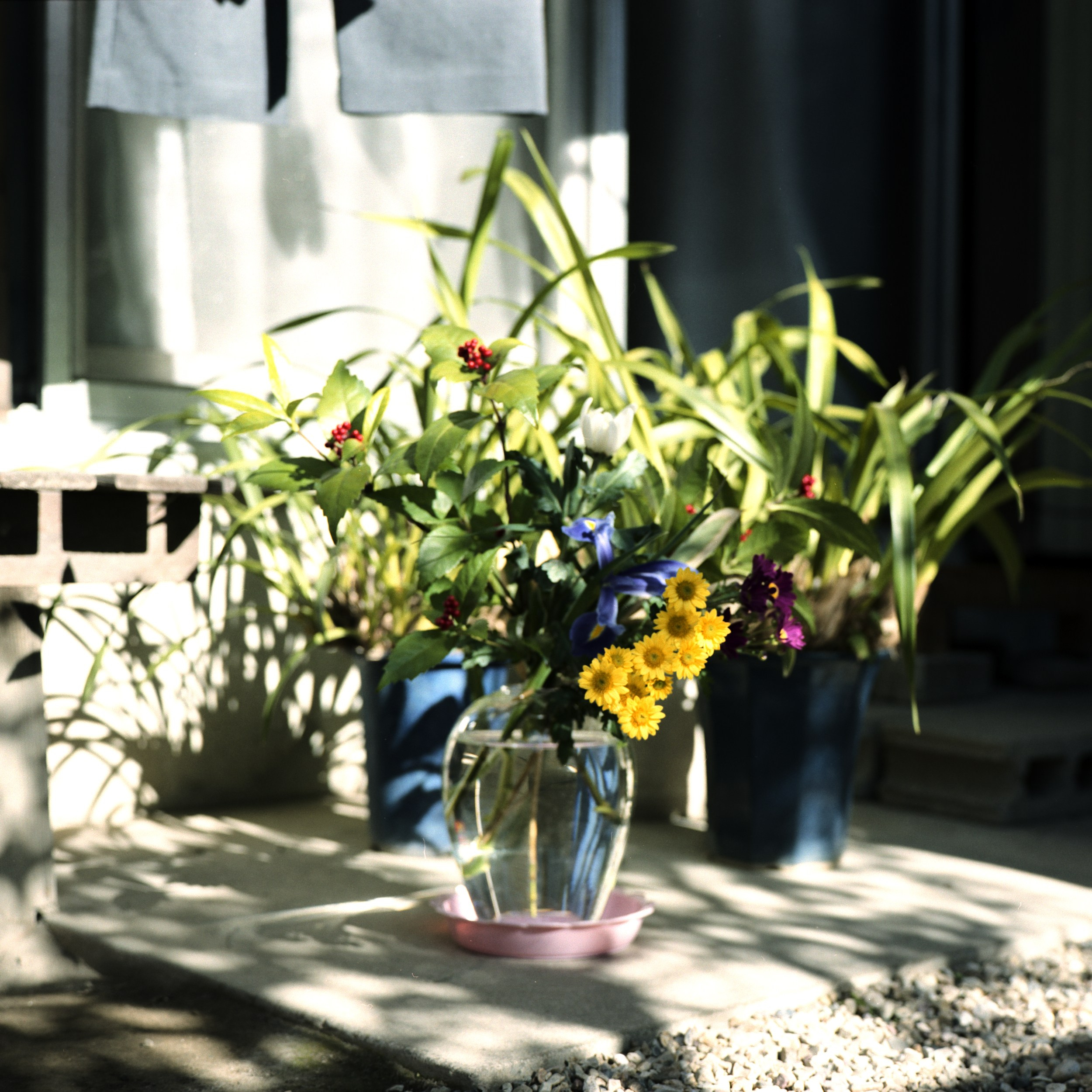
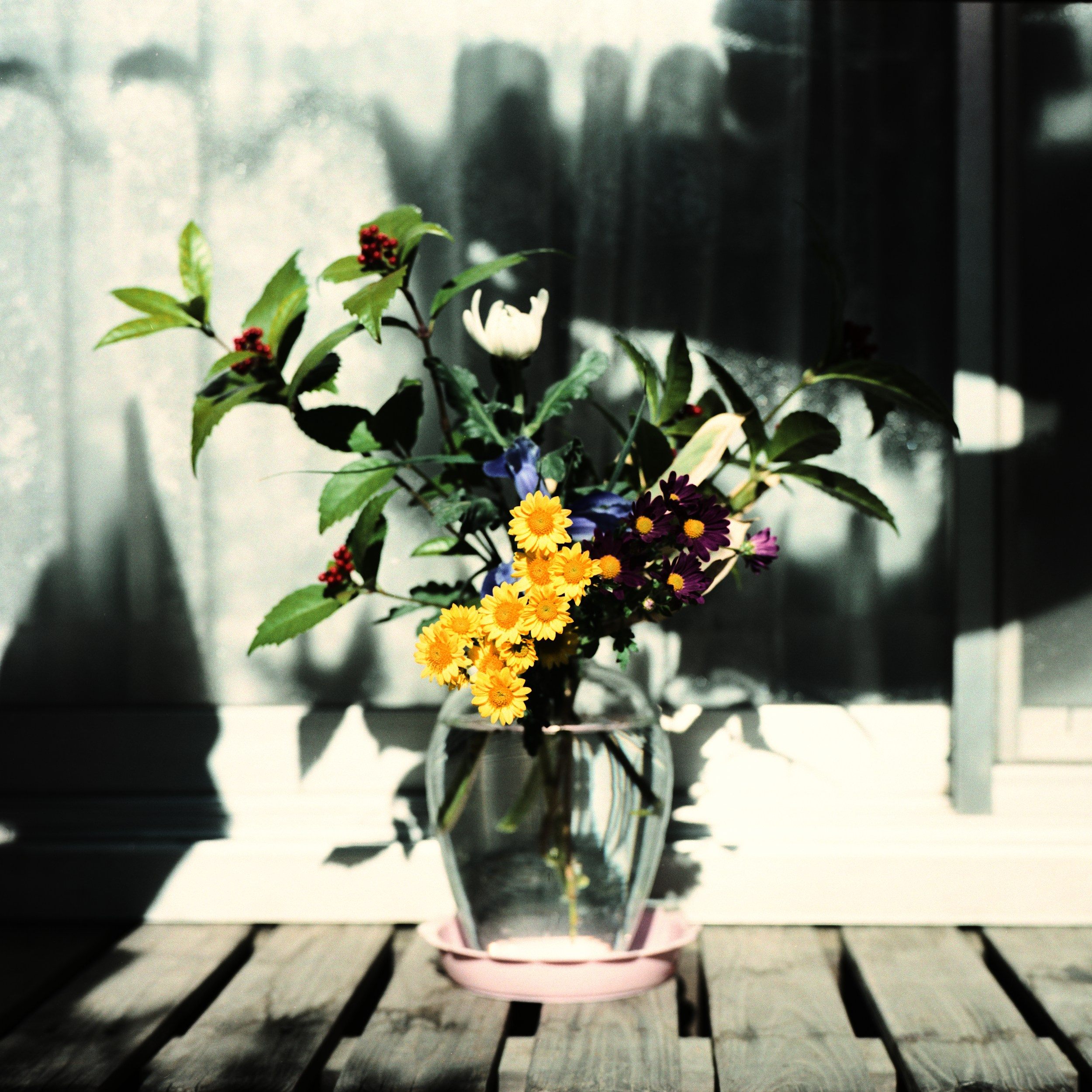
For the shoot, I intentionally chose the same medium format film camera my grandmother used when she was active. Instead of looking through the waist-level finder, I looked into her eyes and pressed the shutter without using the viewfinder. This often resulted in "blurry" images. Her eyes seemed to look at me, yet due to dementia, they often didn't recognize me, and I was bewildered by this invisible distance. That experience, along with the physical tension and the trembling of my heart during shooting, is etched into each photograph.
At the time, I felt I hadn't taken the pictures well. However, several years after her death, I began to realize that this very "blur" symbolizes the uncertain truth of our relationship. The photographs don't just project fragments of memory; they highlight the gaps and simultaneously reflect the incompleteness of memory and the potential harshness of photography itself. Within these conflicting natures, our story is deeply etched.
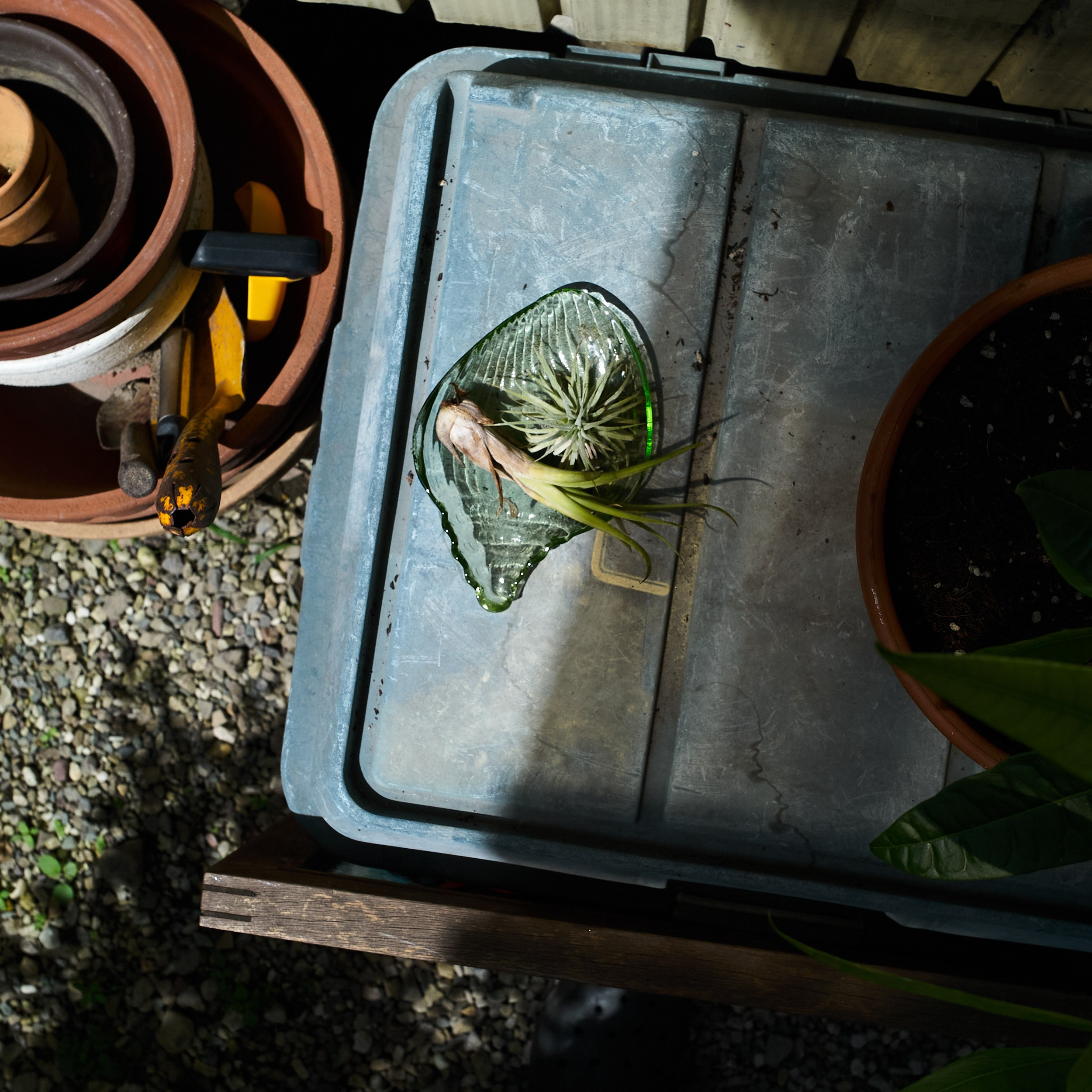
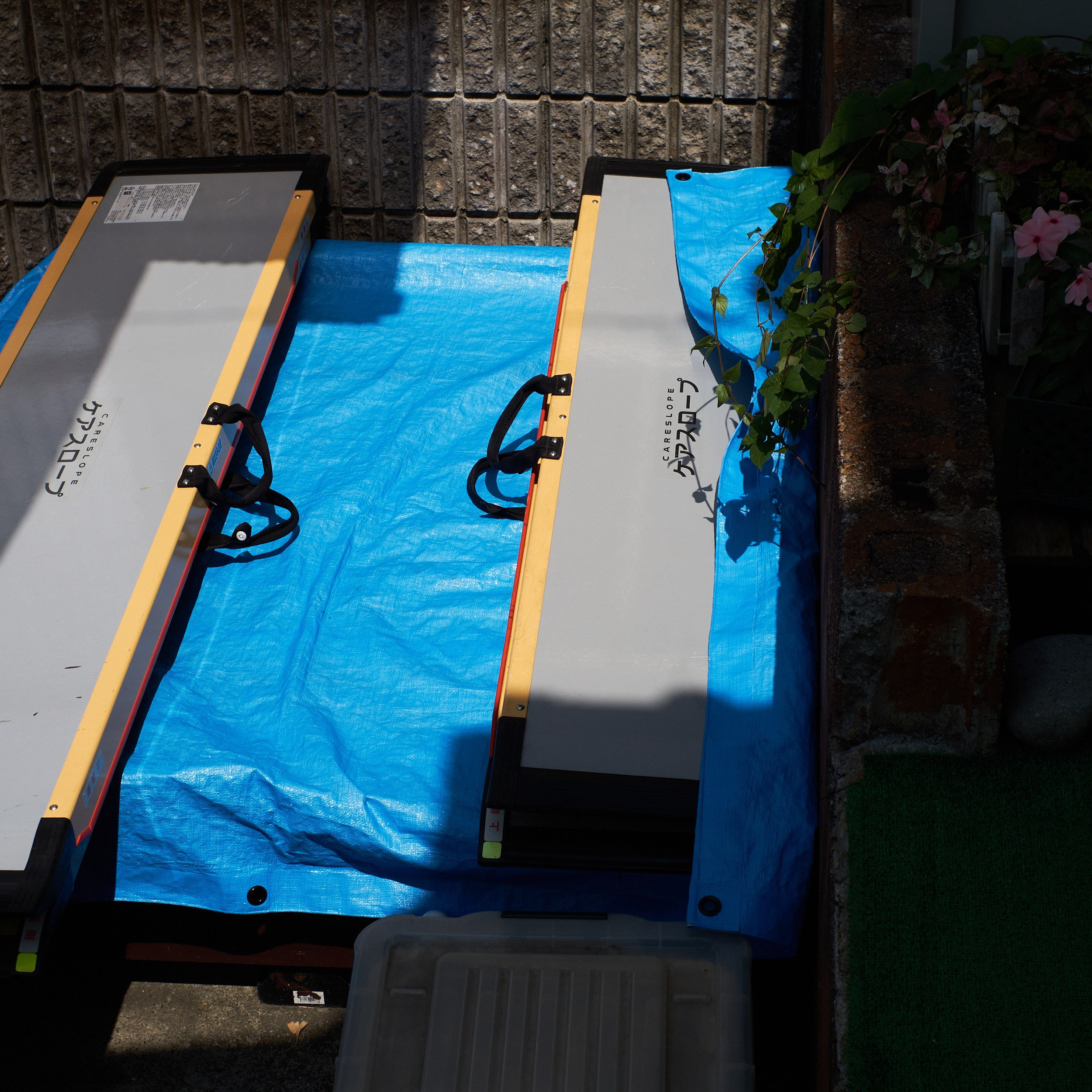
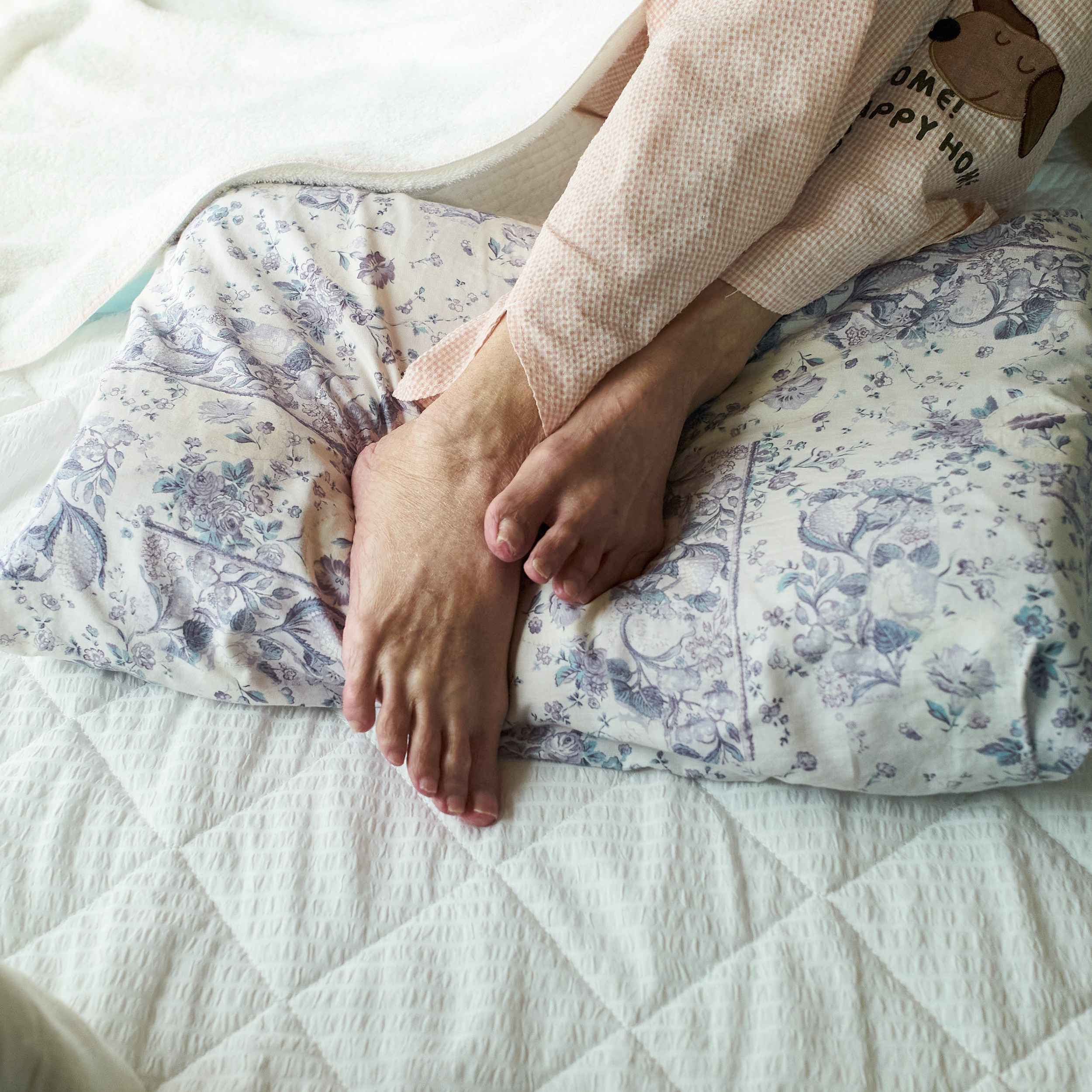
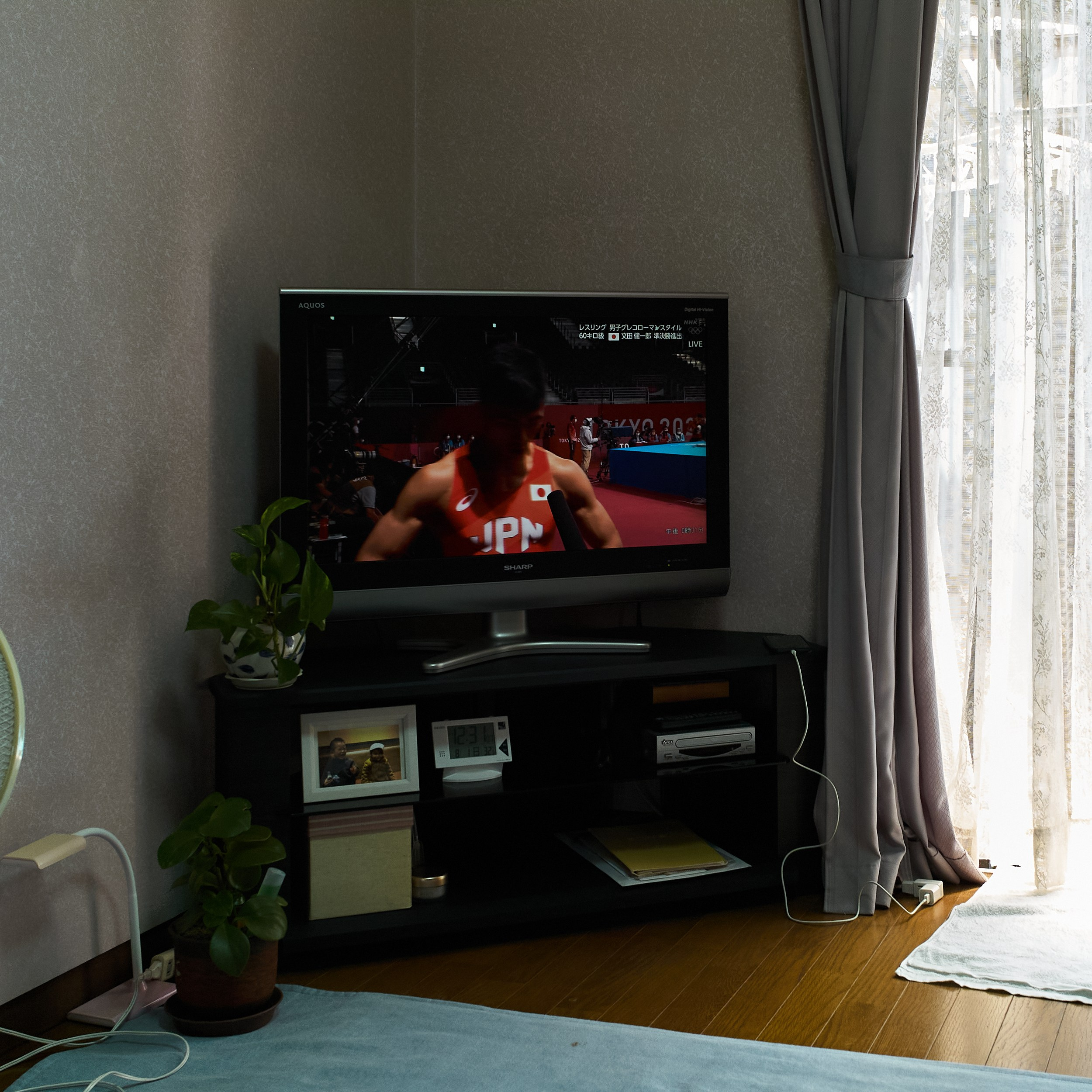
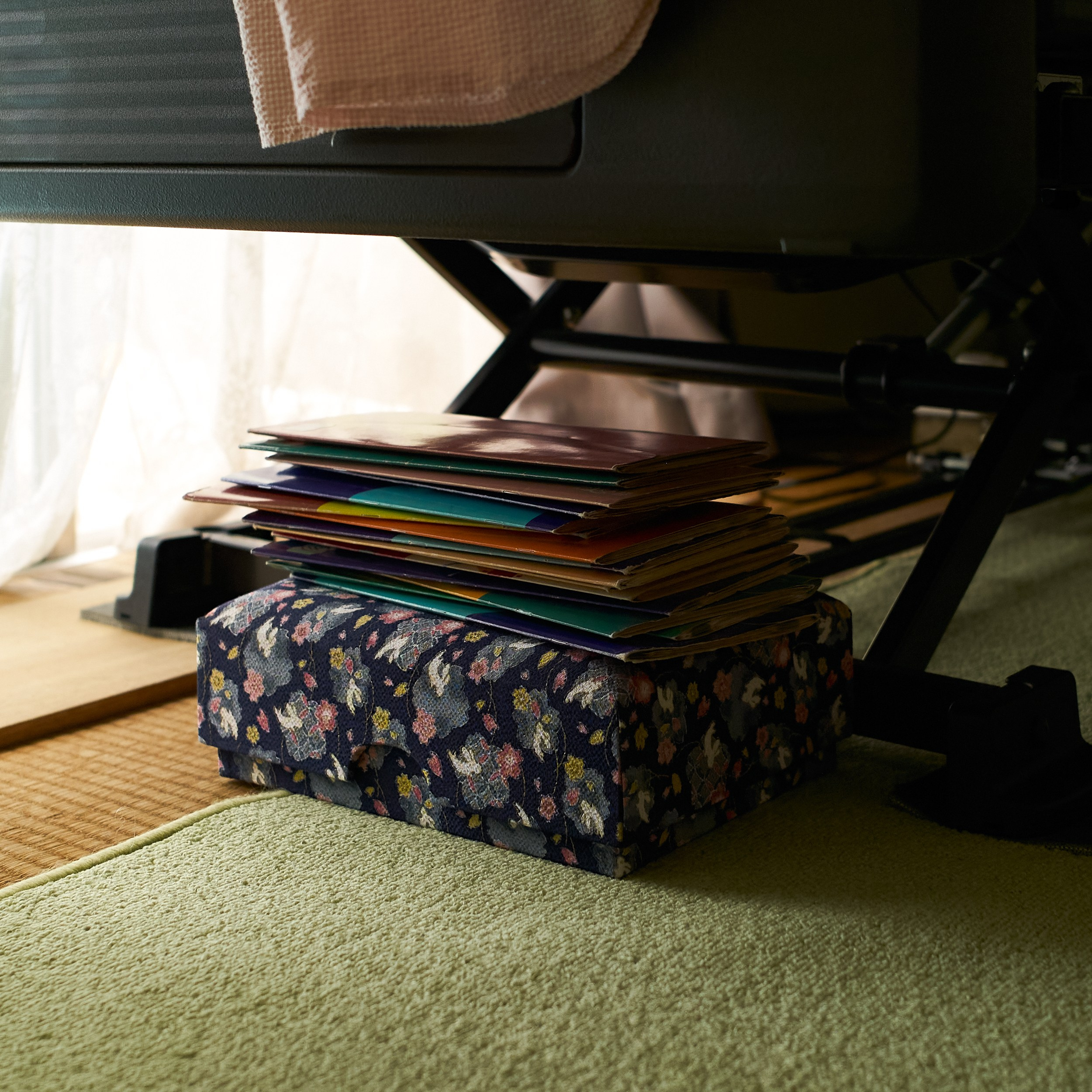
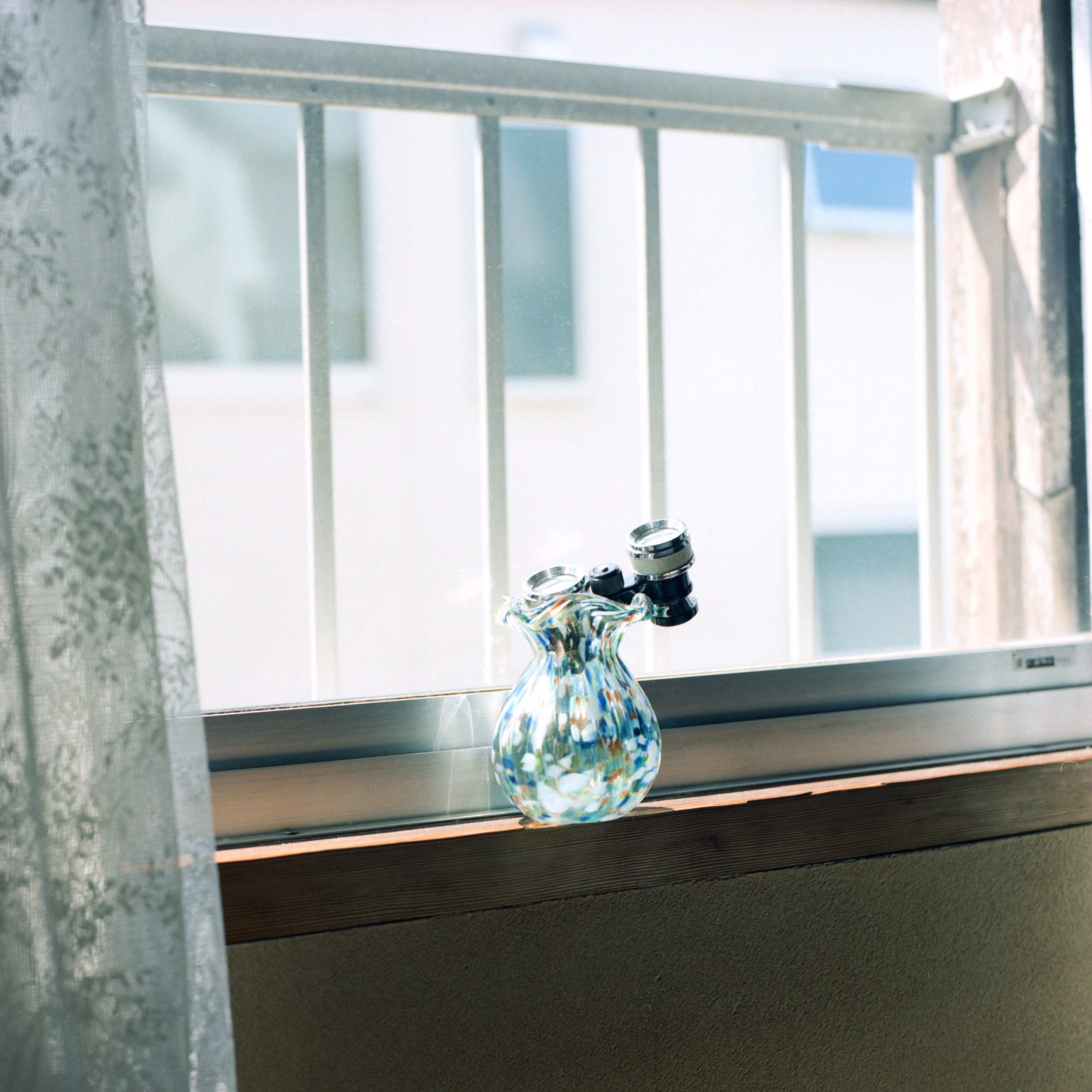
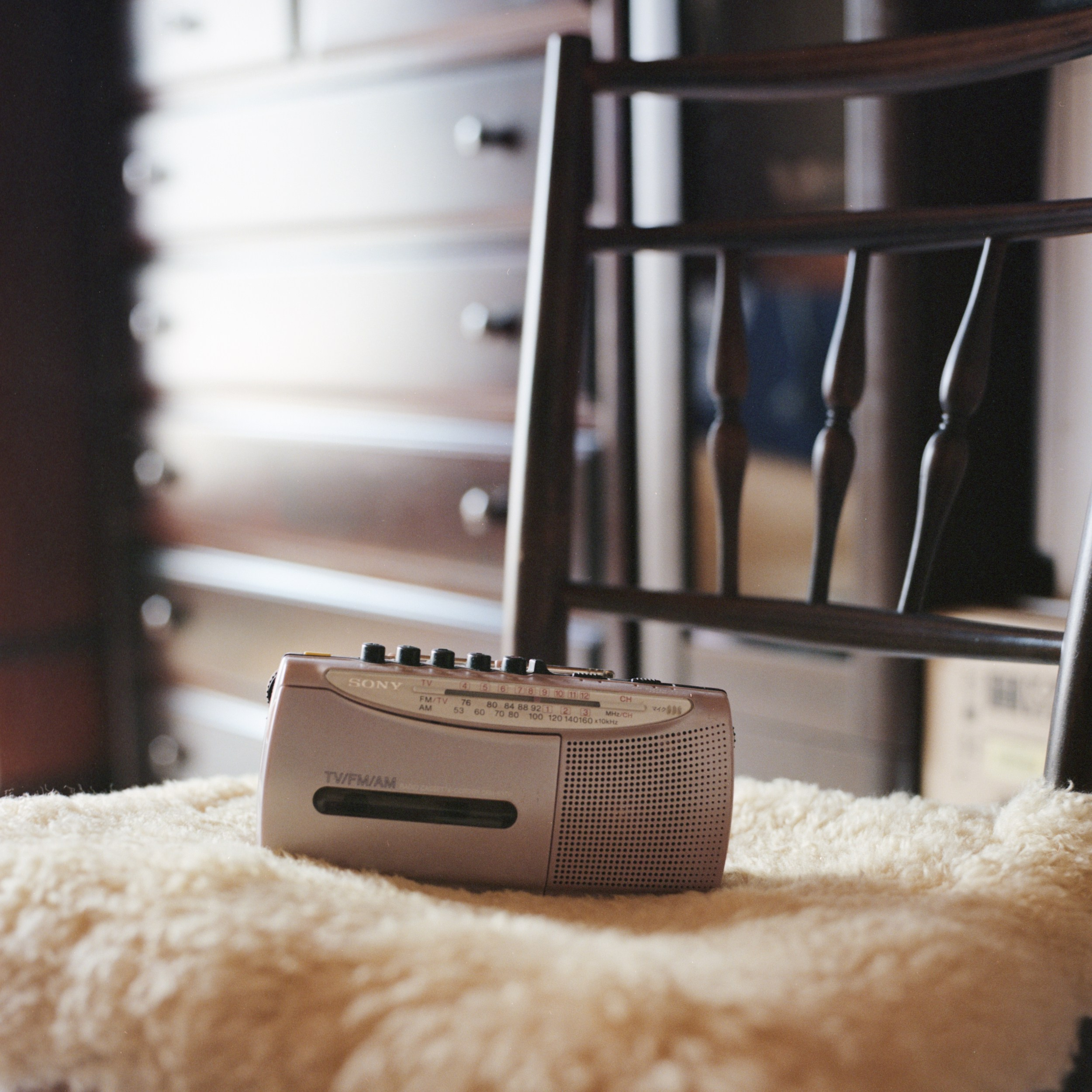
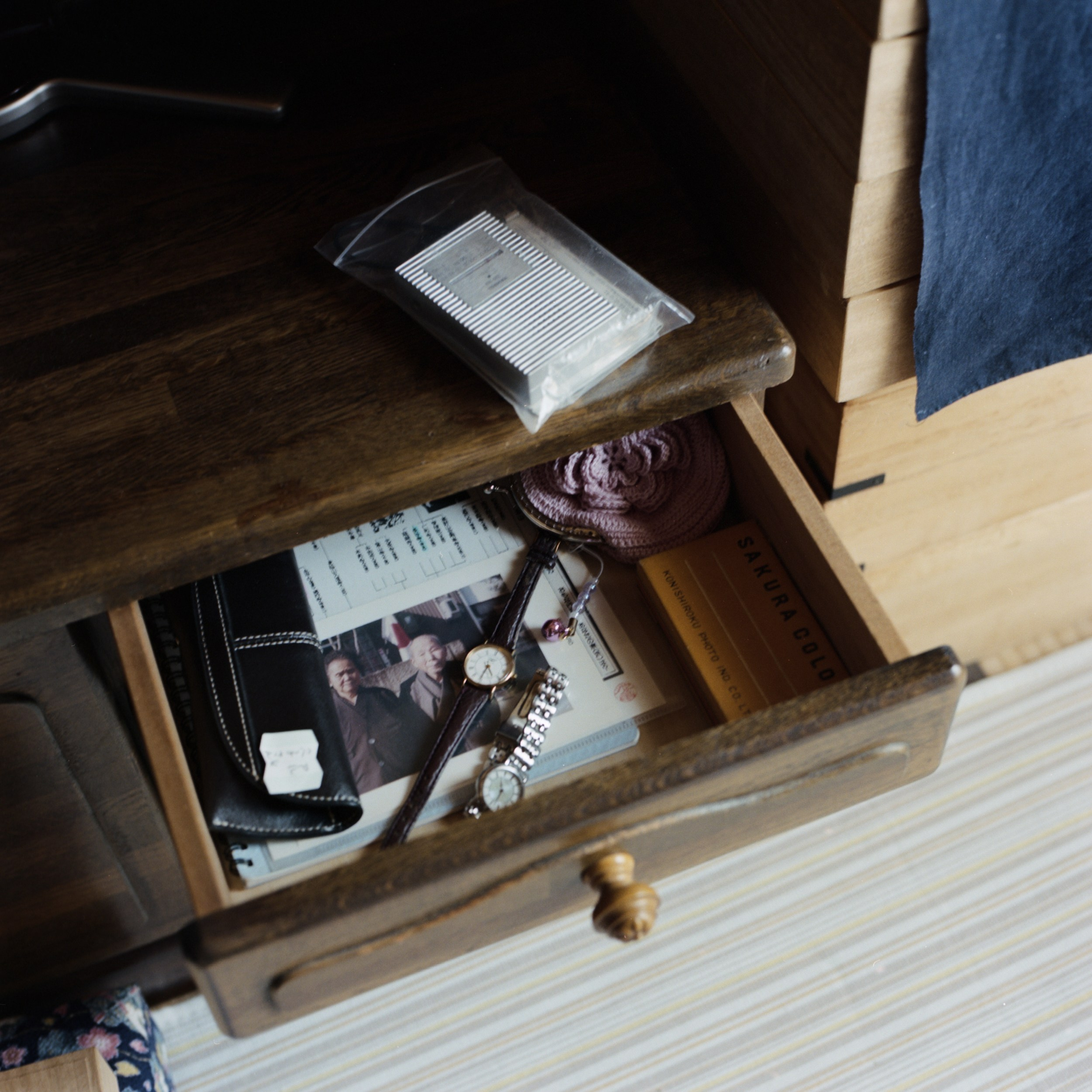
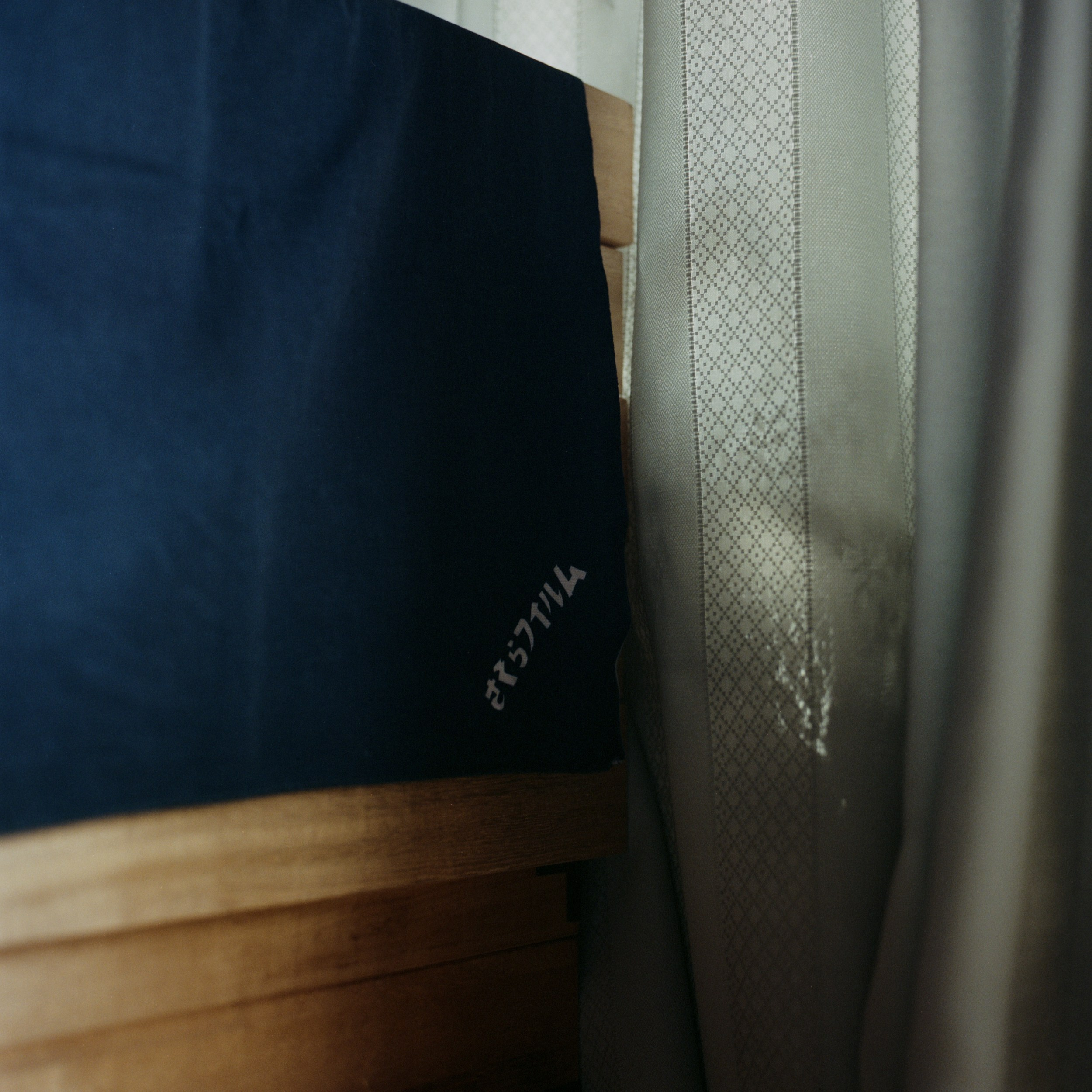
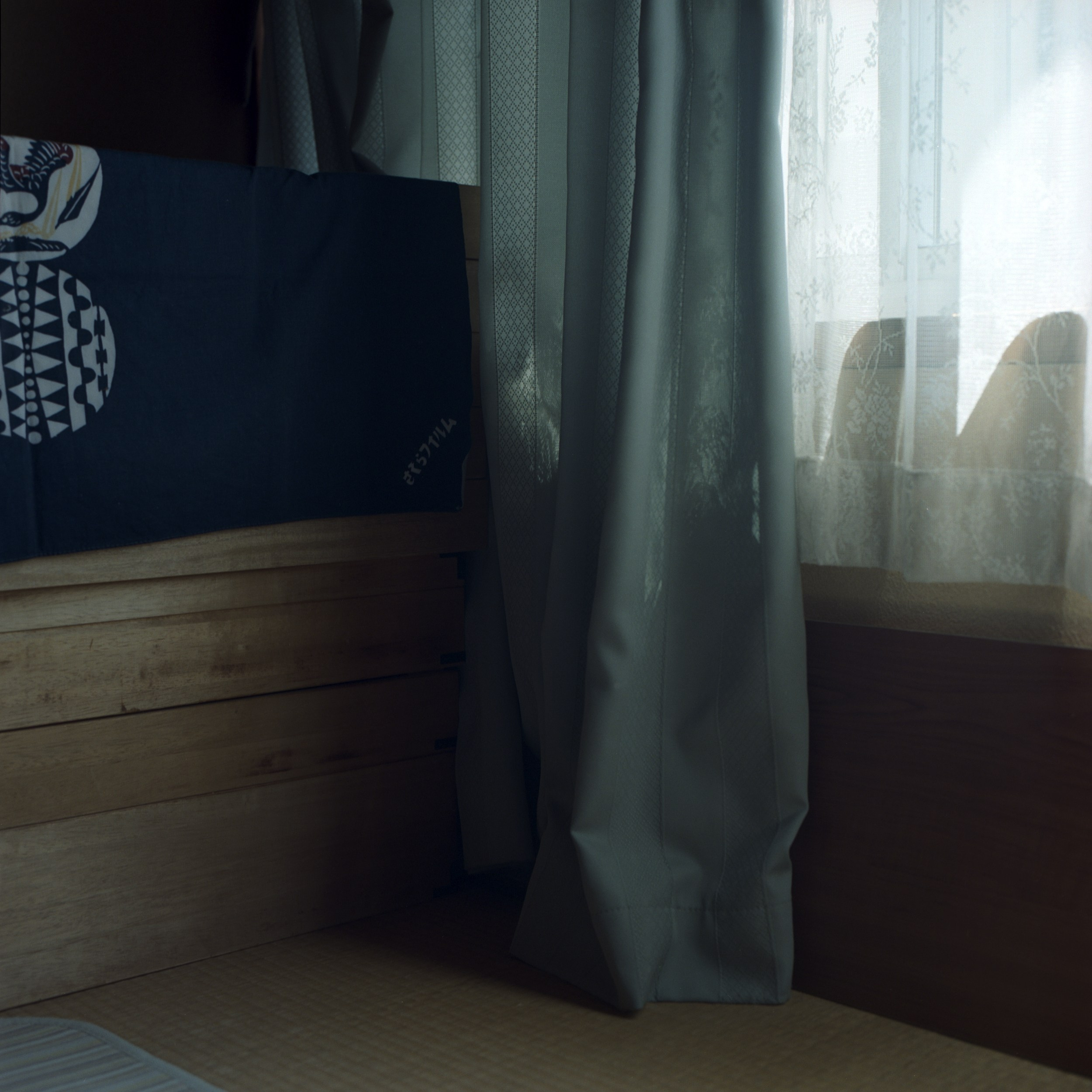
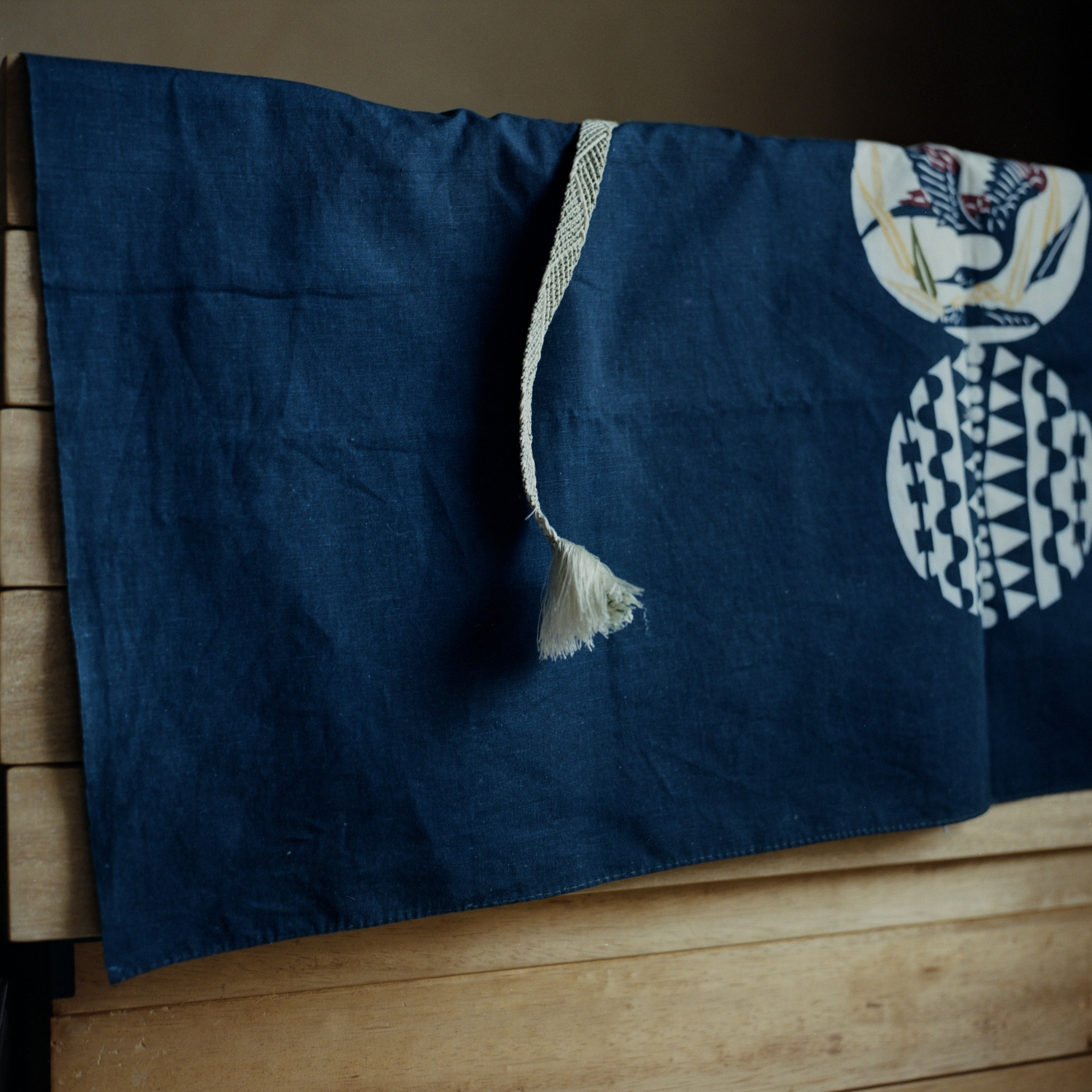
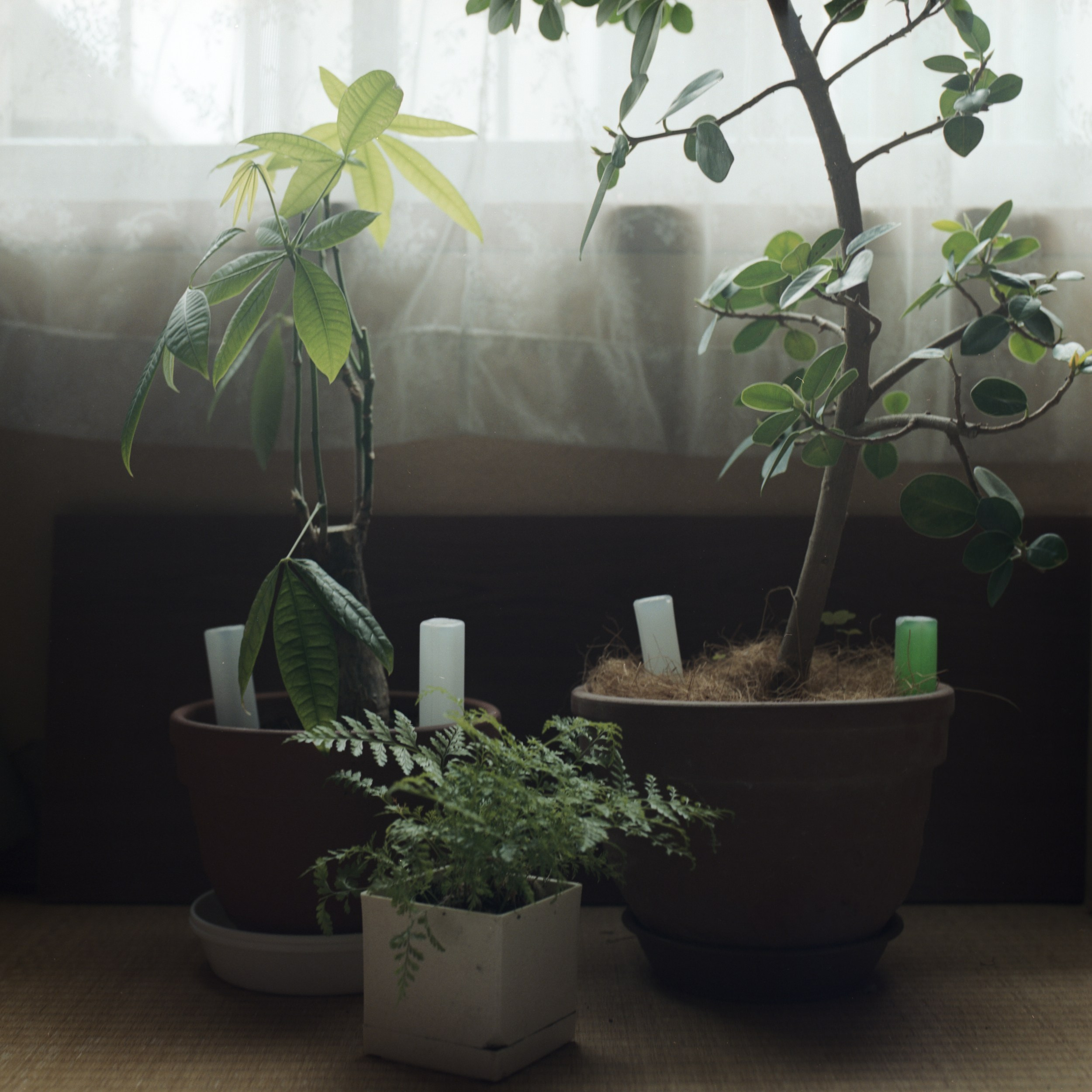
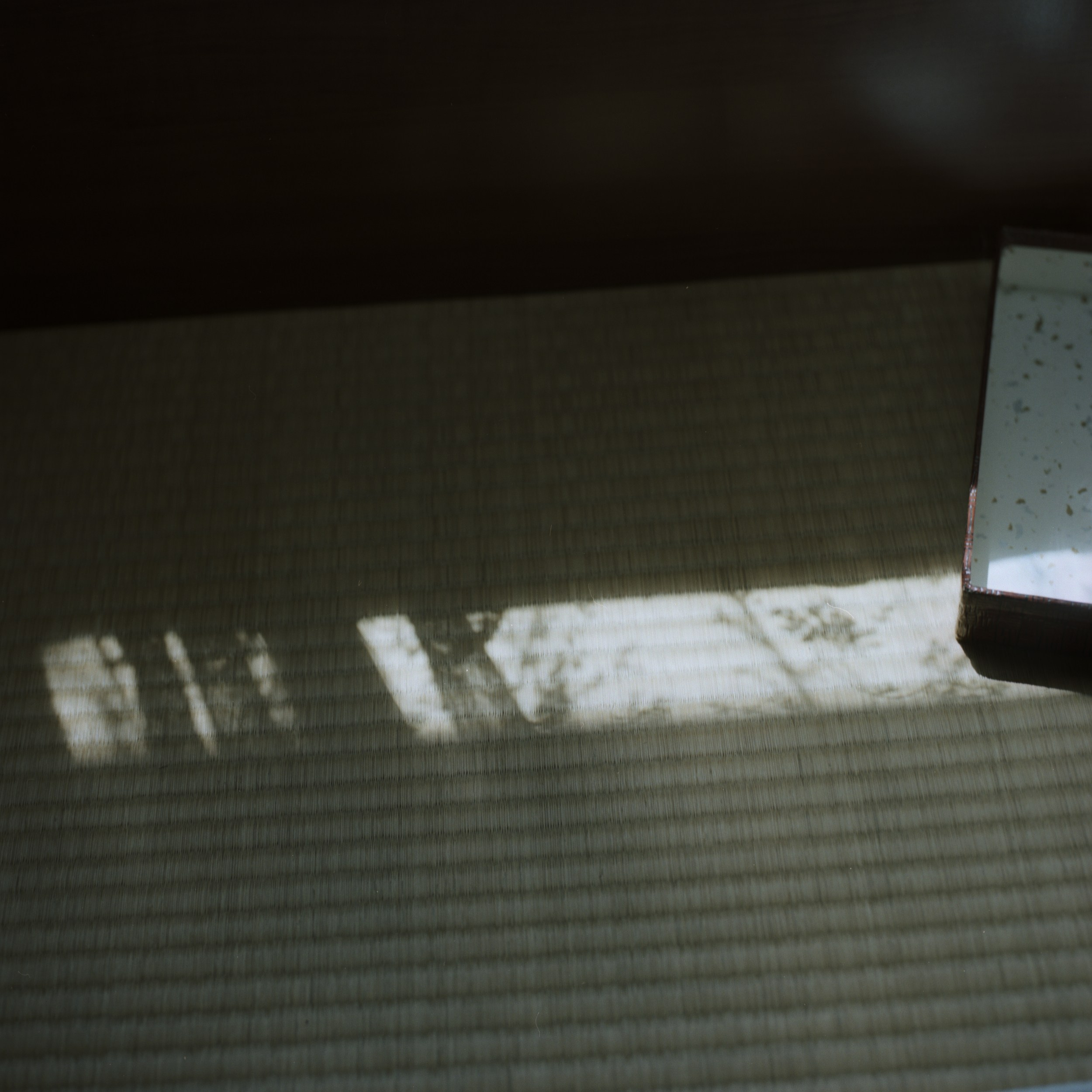
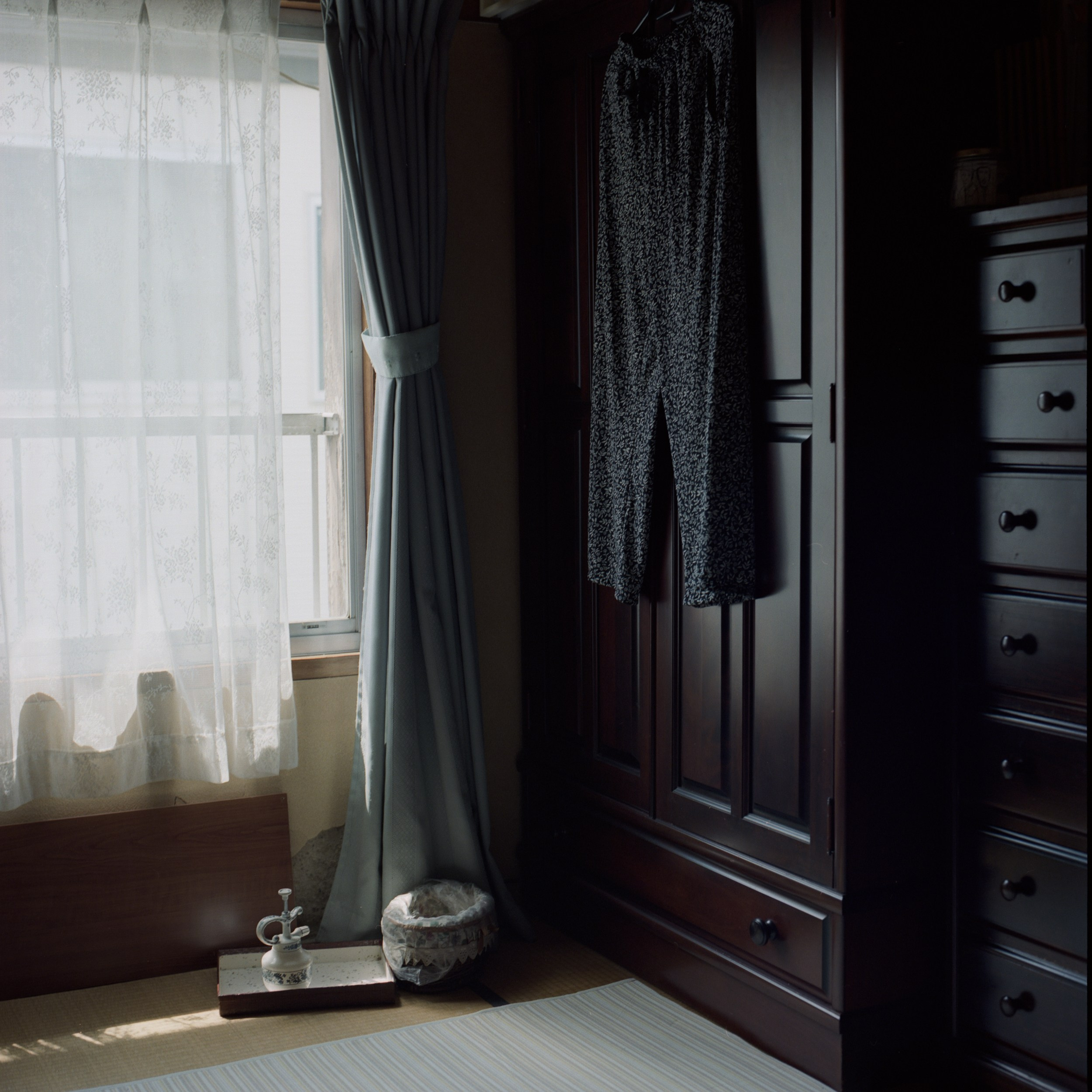
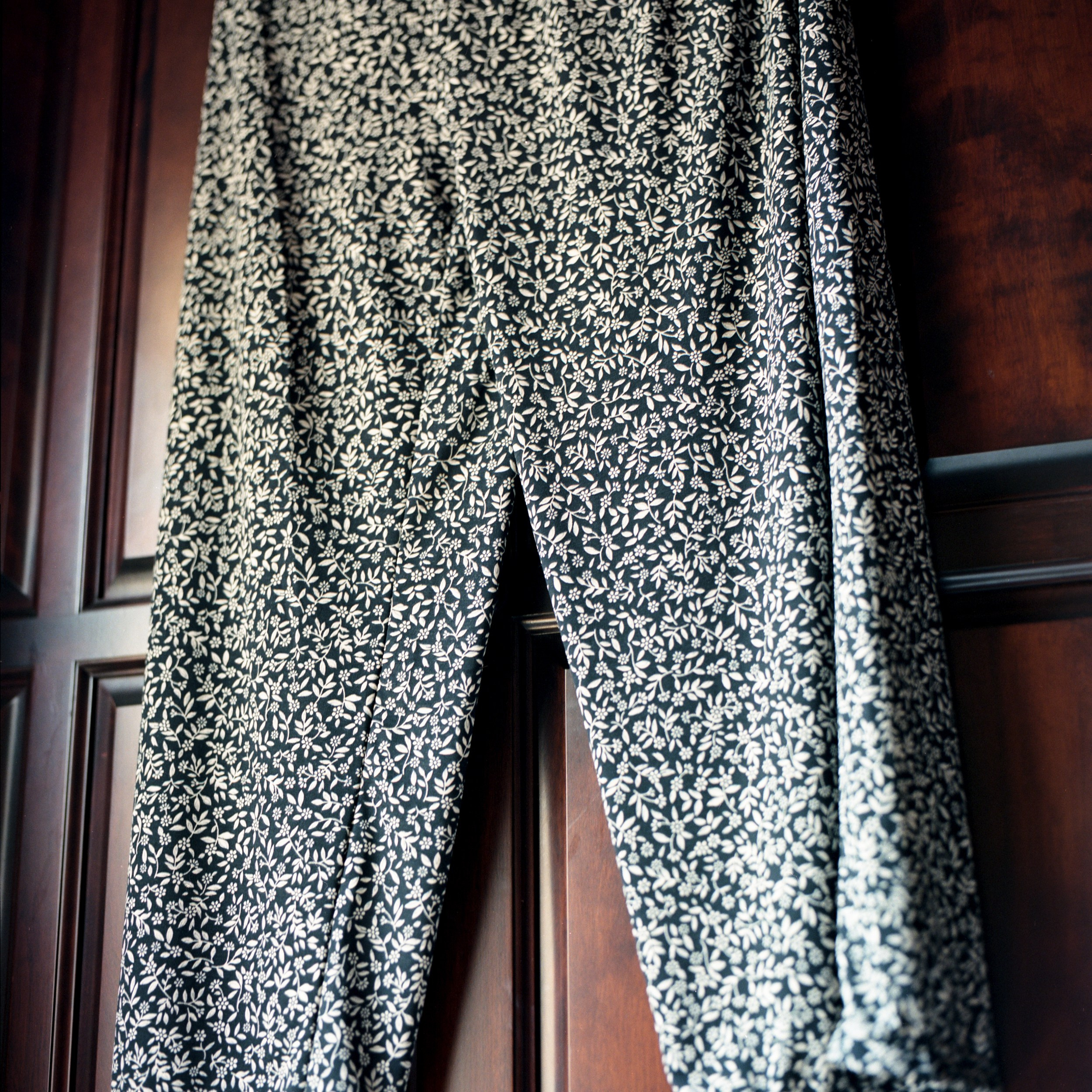
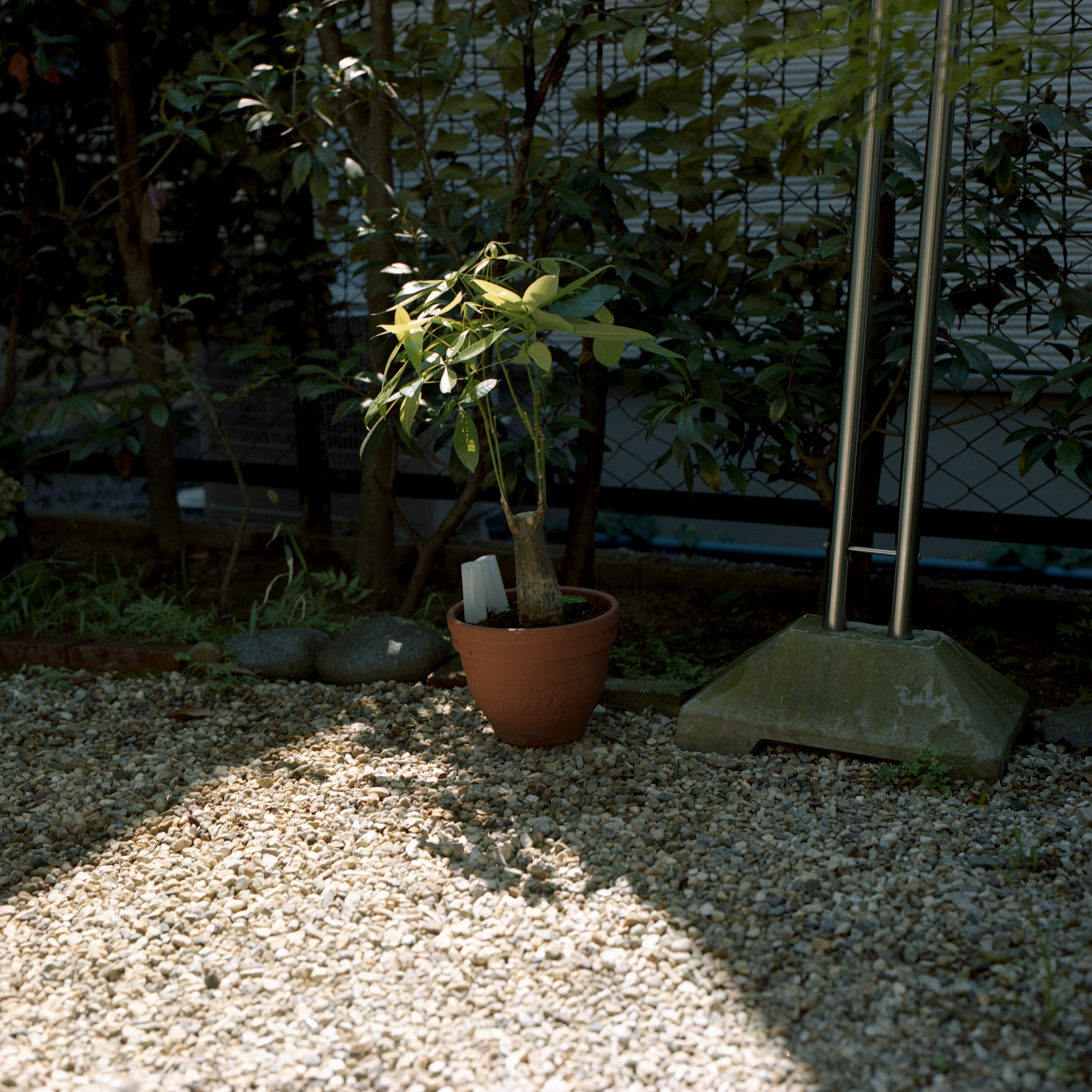
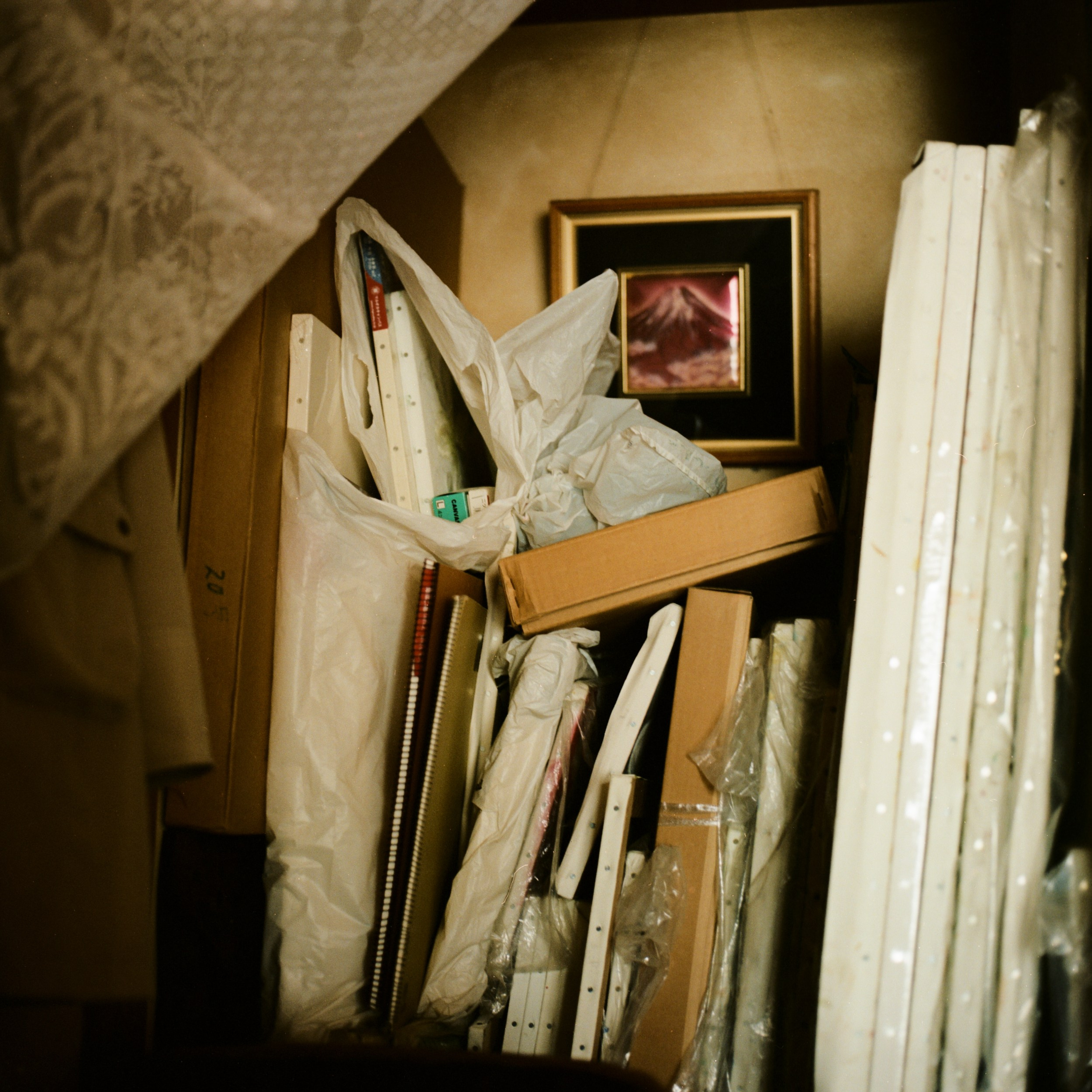
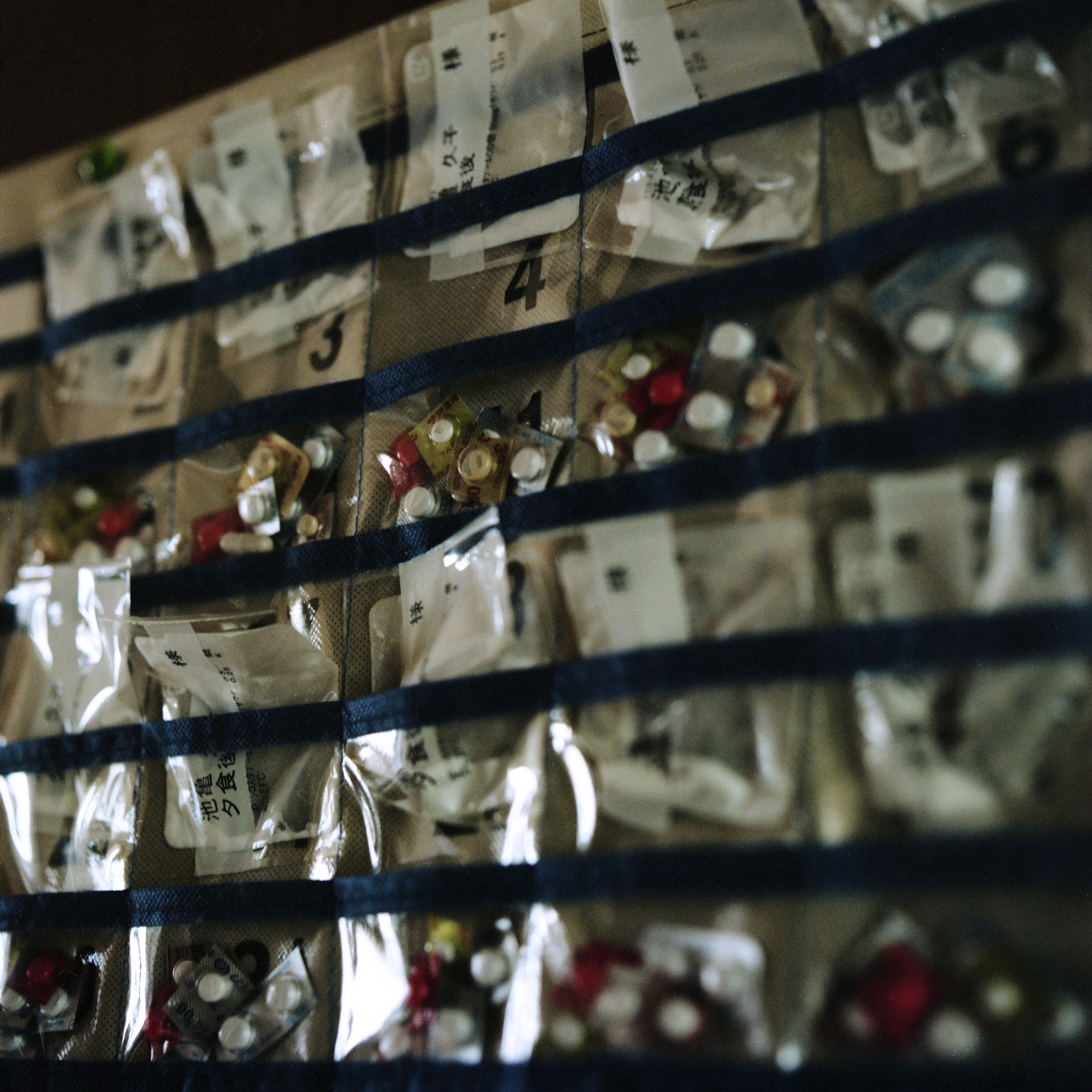
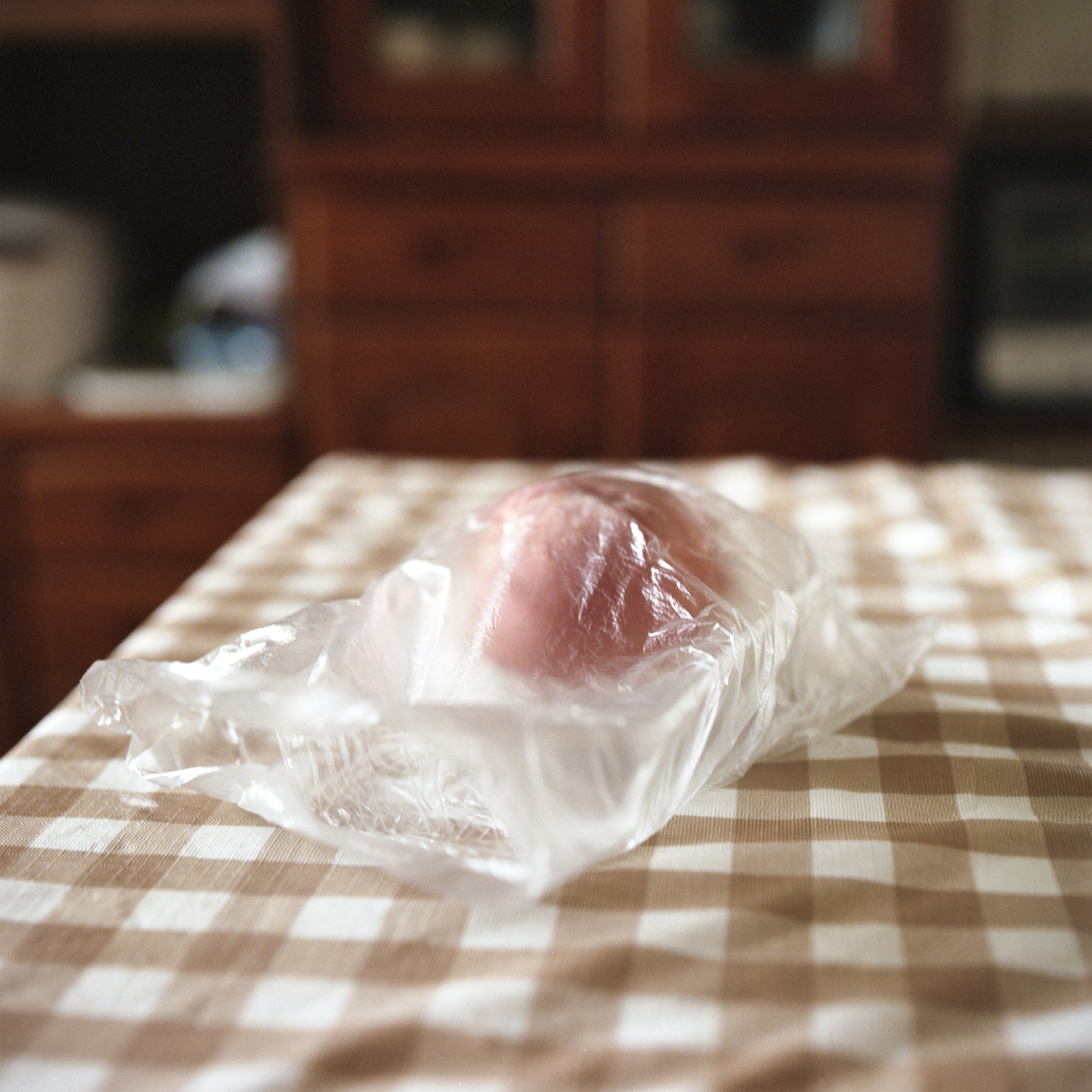
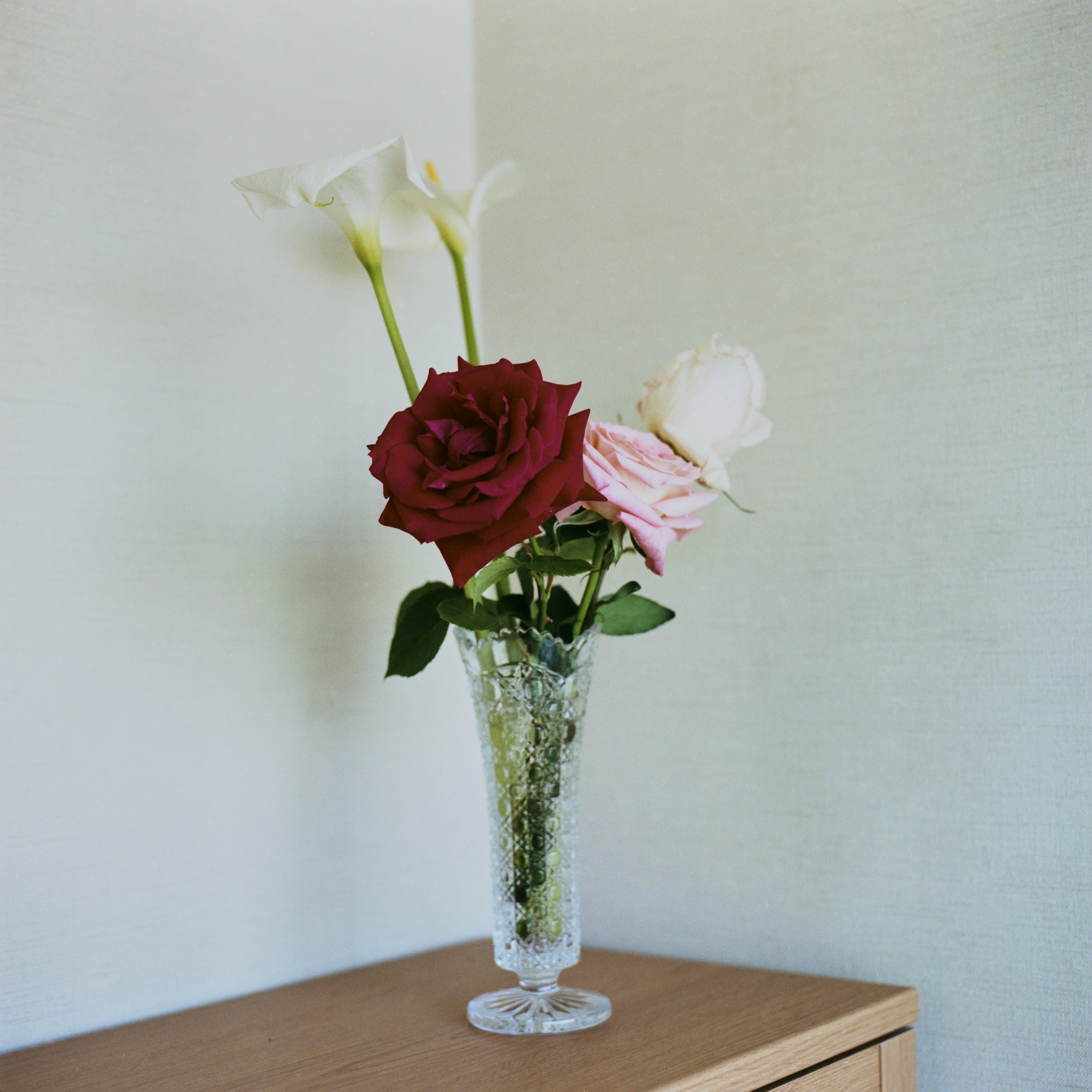
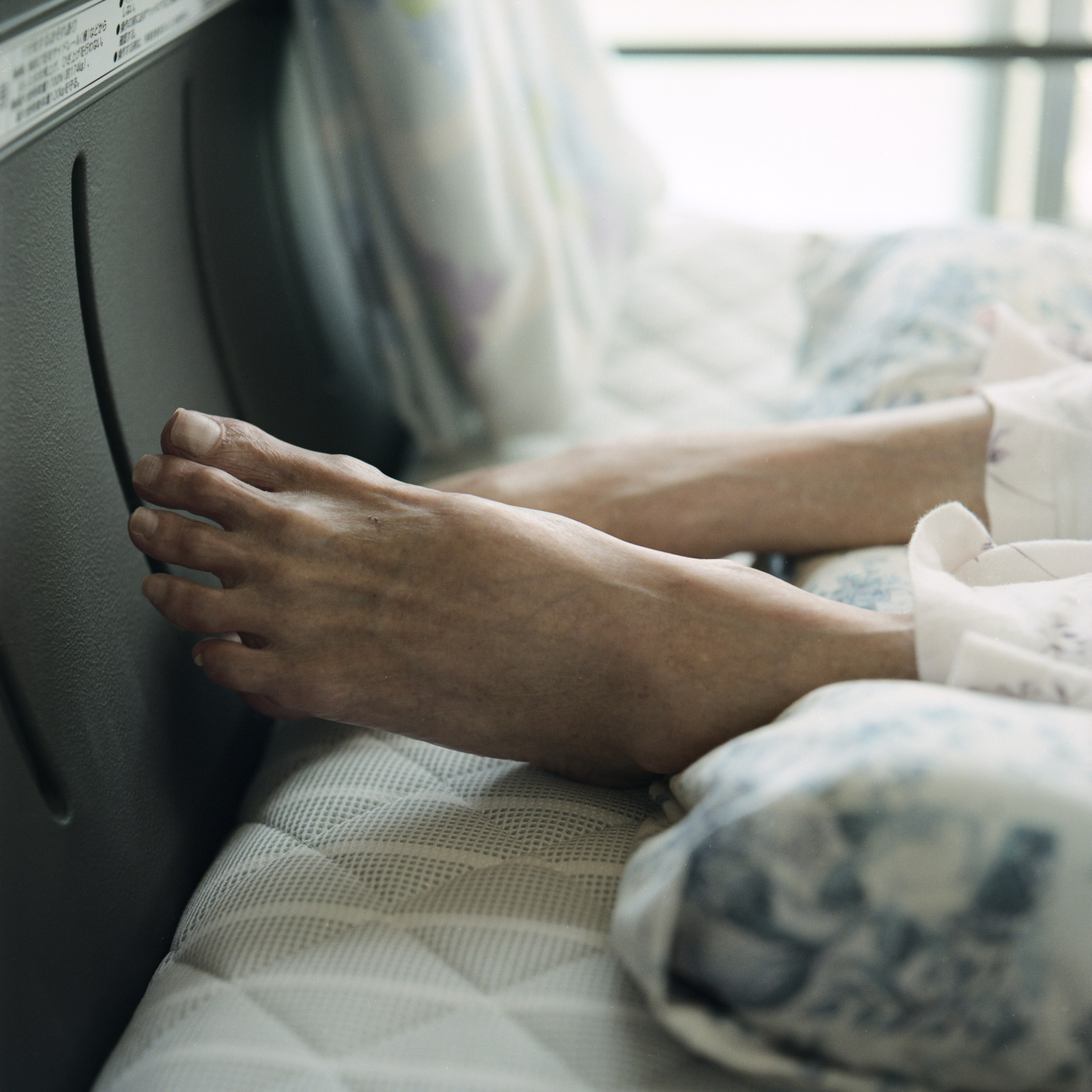
I aimed my camera not only at my grandmother’s face but also at her hands, feet, beloved opera glasses, radio, and the corners of her quiet room—the "things" that shaped her daily life. They are like small witnesses wandering between memory and reality. The physical confusion and conflicts during the shooting process are intertwined with my inner tremor and are born as part of the photographs.
Around the same time, my mother organized my grandmother’s vast collection of photos. Each of us, in our own way, was picking up fragments of my grandmother's existence and memory.
The resulting photographs and the organized albums are never a "complete memory." Rather, I feel that the power of a "fluctuating testimony" brought by photography resides within those very blurs and absences.
My grandmother has passed away, and as the seasons turn, I revisit these photographs, journeying between the past and the present, confronting them quietly. Photographs are not merely still images; they harbor the fluctuations of time and project the fissures of memory.
This project is a personal history revolving around the life of a woman who loved photography, and at the same time, an attempt to connect with the discontinuity of memory faced by a family dealing with dementia. The limits and richness of photography, aging and forgetting, and the uncertainty contained within—the "blur" is the core of our story, and I hope it resonates with the viewer's sensibility.